
Mega Evolution Is No Longer Nostalgia, but the Main Story of Pokemon TCG in 2026
Through April 10, 2026, the case for Mega Evolution as Pokemon TCG’s main story is stronger than the usual nostalgia-cycle argument. This is not really about one flashy comeback set or a few fan-favorite card reveals. It is about how Pokemon itself has organized the year so far: release scheduling, Pokemon TCG Live updates, rotation education, and early competitive testing have all centered on Mega-era products and mechanics.
That does not mean Mega decks have already solved the format or that every important event has been won by a Mega list. In fact, early results already show the opposite of a simple takeover narrative: Mega decks are present in meaningful numbers, but non-Mega archetypes still matter. The sharper point is different. In 2026 so far, Mega Evolution has become the framework through which Pokemon is rolling out products, teaching players the new environment, and setting up post-rotation play. For broader competitive context, see Pokemon Meta Report: How to Read Usage vs. Conversion Before You Pick a Deck.
The release calendar stopped treating Mega Evolution like a one-set gimmick
The easiest way to see the shift is to look at cadence. Official scheduling did not position Mega Evolution as a one-off callback and move on. Instead, Pokemon built a sustained run that started in late 2025 and carried into Q1 2026, with Phantasmal Flames in November 2025, then Ascended Heroes in January 2026, and Perfect Order in March 2026. By that point, the pattern was hard to dismiss as a single nostalgia beat.
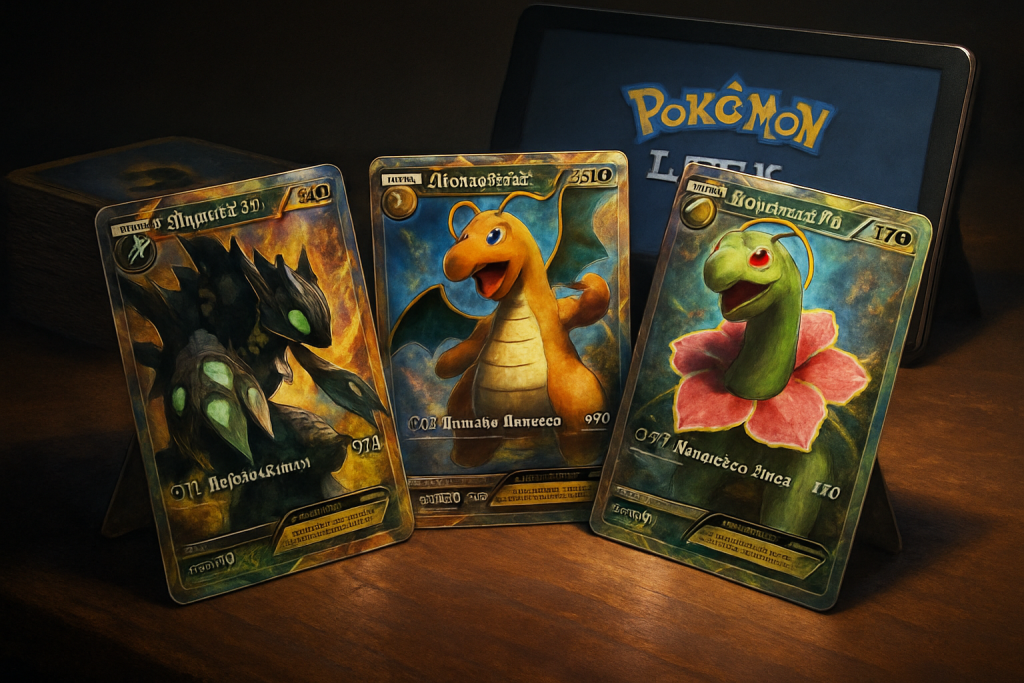
Ascended Heroes mattered especially because its official product framing leaned directly into Mega Evolution as a marquee mechanic, including named highlights like Mega Dragonite ex and Mega Meganium ex. Then Perfect Order followed quickly with another Mega-facing push, including Mega Zygarde ex on the official release page. That kind of sequencing matters. A theme can be prominent in marketing copy for one release; it becomes the year’s main story when multiple consecutive products keep reinforcing it. For related context, see Pokemon Meta Report: How to Read Usage vs. Conversion Before You Pick a Deck.
Just as important, this was not only a card-file story. Pokemon tied these launches to platform support and competitive timing, which made the Mega push feel structural rather than decorative. The release calendar was telling players what mattered, but so were the systems around the cards.
Pokemon TCG Live turned Mega launches into full platform events
If the product schedule established the theme, Pokemon TCG Live turned it into an ecosystem-wide one. In official community communications and patch notes across January and March, Mega-era sets were not treated as simple content drops. They were tied to battle pass decks, ranked play timing, onboarding content, and rotating side modes inside the client.
The January Pokemon TCG Live community letter and the related version 1.34.0 patch notes tied Ascended Heroes to new battle pass decks built around Mega Dragonite ex and Mega Meganium ex, plus Learning Lab support and ranked play changes. That is a very different signal from merely saying, “here is the next set.” It means Pokemon wanted players to learn, queue, and prepare through Mega-linked products from day one.
March pushed that pattern further. The March 2026 community letter and version 1.36.0 patch notes connected Perfect Order and rotation season to a broader platform package: new starter decks, fresh Learning Lab lessons, updated ladder context, and Trainer Trials. In other words, Mega was not just a release-day headline. It became part of how Pokemon TCG Live organized progression, discovery, and practice.
That platform treatment is one of the clearest reasons this goes beyond a memory-driven callback. Nostalgia can sell packs. It does not automatically become the backbone of battle pass rewards, tutorial structure, and recurring mode support. Pokemon chose to make Mega-era content the thing players would repeatedly encounter whether they were collecting, learning, or grinding games online.
Ascended Heroes forced real rotation and legality conversations
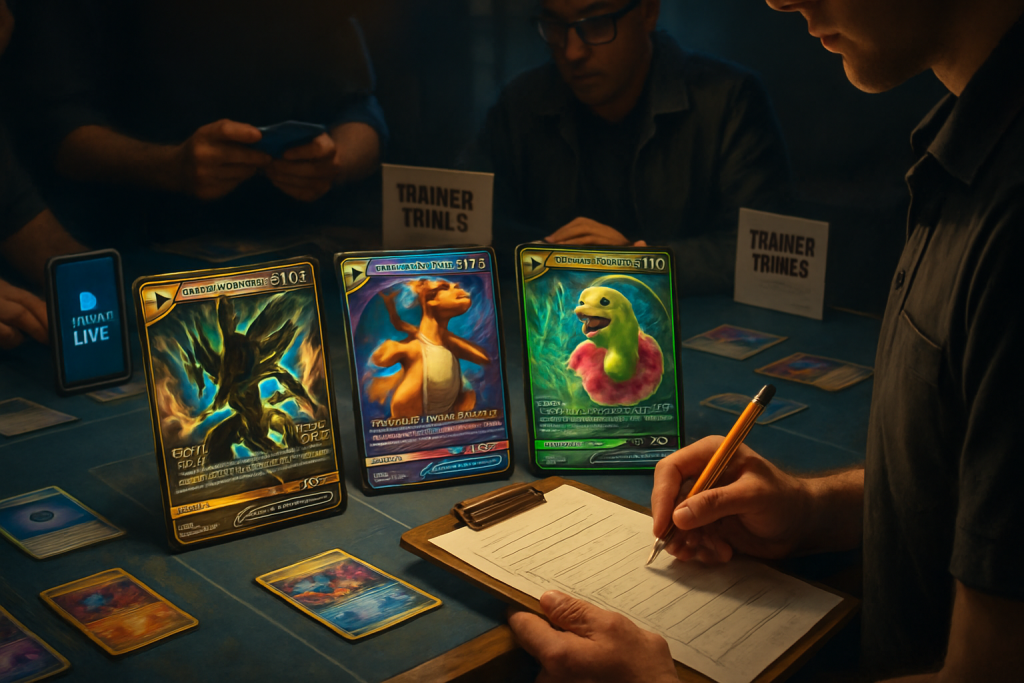
The strongest proof that this was more than a flavor theme came when Mega-era releases collided with legality and rotation prep. Ascended Heroes arrived in a period where players needed clarity about what counted for Standard, how upcoming regulation-mark changes would work, and how to prepare for the split between the old and incoming rulesets. Pokemon responded with direct competitive-support messaging rather than leaving the community to infer the answers.
Pokemon’s official communication around Ascended Heroes and rotation established not just release information, but how players could bridge into the next Standard environment. The company’s support around Early Rotation in Trainer Trials gave players a structured way to test the incoming format before the full switch, while official Live updates and educational materials explained the legal card pool and the relevance of H, I, and J regulation marks.
That matters because legality support tends to show what the publisher believes will shape actual play. Pokemon did not treat Mega sets as isolated collector products. It integrated them into the most practical questions competitive players had at the time: what is legal, what should I test, and how do I prepare for the format that is about to matter? Players trying to turn that information into actual deck choices may also find Pokemon: When to Change Tech Slots Between Regionals and Locals useful once the field starts to settle.
March reinforced the point again. The rollout around Perfect Order and Standard rotation included Champion’s Training Ground, a Trainer Trial meant to preserve the prior Standard rules for practice while the new environment came online elsewhere. Combined with updated Learning Lab lessons, that made the Mega era part of a larger transition toolkit. Pokemon was not only printing Mega cards; it was using Mega-era products as the bridge into the next competitive season.
The first post-rotation testing already shows Mega decks are part of the format’s center
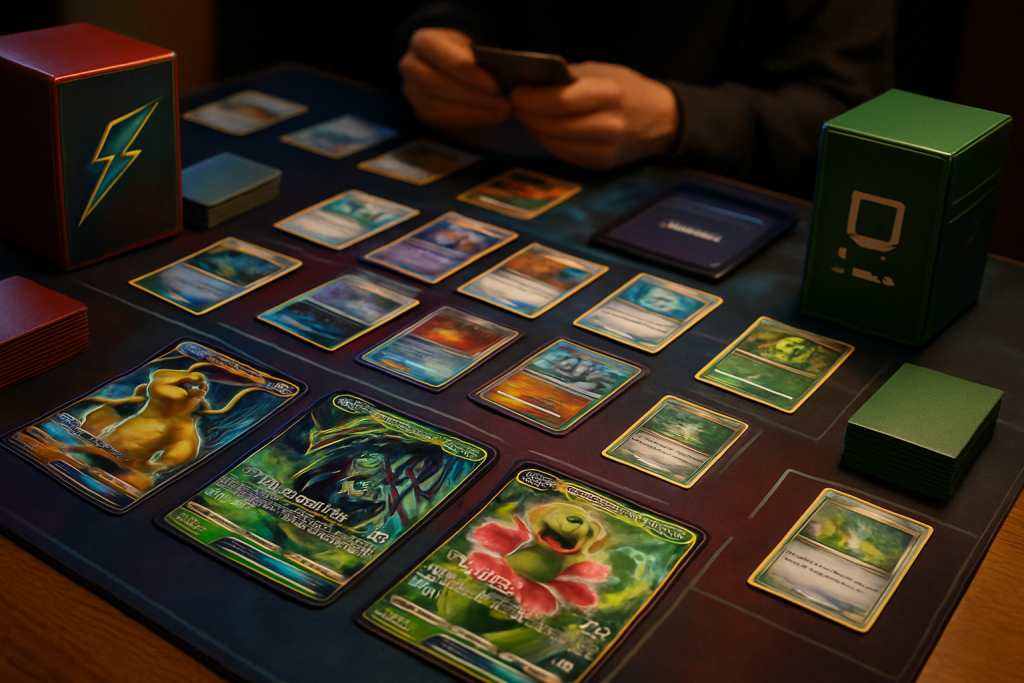
Early competitive evidence does not prove Mega supremacy, but it does support Mega centrality. The clearest snapshot so far is the April 7, 2026 Post-Rotation Clash, a 240-player event that gave one of the first large looks at what players actually chose to register after rotation.
A non-Mega deck won the tournament, which is an important check against overstatement. But the event still featured several Mega-linked archetypes in visible numbers across the field and standings conversation. That is exactly the distinction this article needs to keep clear: Mega decks do not need to have already become the uncontested best decks for Mega Evolution to be the year’s main story. They only need to be central to what players are building, testing, and preparing for. Early post-rotation data already says they are.
That kind of result matters more than social hype because it reflects actual registration behavior under a fresh ruleset. Players had every reason to use the event to pressure-test what they believed was competitively relevant. The presence of multiple Mega-adjacent archetypes suggests the community took the mechanic seriously as soon as the new Standard environment opened, even with strong non-Mega competition still intact.
Because this evidence is still early, the safest reading is analytical rather than absolute. One event snapshot can show that Mega decks are central to testing and discussion; it cannot, by itself, prove the rest of the season belongs to them. If you want a better framework for interpreting early-field data like this, see Pokemon Meta Report: How to Read Usage vs. Conversion Before You Pick a Deck.
So the current evidence supports a narrower and more defensible claim: Mega decks are already in the room, already taking up testing bandwidth, and already shaping the first serious conversations about the post-rotation field. Through April 10, that is enough to call them central without pretending the format is solved.
Why this is different from pure nostalgia
Plenty of returning mechanics get a warm reception because players remember them fondly. That alone does not make them the main story of a competitive card game year. Mega Evolution looks different in 2026 because it has been used across four layers at once.
First, it has driven the release engine, with consecutive products keeping Mega cards and branding pressure at the front of the calendar. Second, it has become an onboarding theme through Pokemon TCG Live, where battle pass decks, starter decks, and Learning Lab support repeatedly pointed players toward the new Mega-era environment. Third, it has served as a competitive support layer, because rotation prep, legality explanation, and Trainer Trials were all built around the same release window. Fourth, it has already shown up in meaningful post-rotation testing, which gives the story more weight than a marketing beat alone.
That is why the nostalgia framing now feels too small. Pokemon has treated Mega Evolution as a system-level organizing theme for 2026 so far. The company used it to sell sets, teach the client, smooth the rotation transition, and populate the early deckbuilding conversation. Those are the signs of a main storyline, not a sentimental cameo.
The remaining caveat is straightforward. Main story does not mean only story, and it definitely does not mean final answer. Through April 10, 2026, the evidence supports saying Mega Evolution sits at the center of Pokemon TCG’s year so far. It does not yet support saying Mega decks will own the entire season from here.
FAQ
Are Mega decks already the best decks in Pokemon TCG?
Not based on the evidence cited here. The article’s point is narrower: through April 10, 2026, Mega decks are central to release cadence, platform support, rotation prep, and early post-rotation testing, even though non-Mega archetypes still matter and at least one major early event was won by a non-Mega deck.
What makes Mega Evolution more than a nostalgia callback in 2026?
The evidence here points to four things happening at once: multiple consecutive Mega-linked product releases, heavy Pokemon TCG Live integration, official rotation and legality support built around the same window, and early tournament testing that already includes several Mega-adjacent archetypes.
What is the strongest competitive evidence in the article so far?
The strongest event snapshot cited here is the April 7, 2026 Post-Rotation Clash. The article also clearly notes the limitation: this is still early evidence and should not be treated as proof that the entire format is solved.
What should players take from this if they are preparing for events?
The practical takeaway is that Mega-era cards and mechanics already deserve testing time and matchup preparation, but players should avoid assuming the format has narrowed to Mega mirrors only. For prep-specific follow-up, see Pokemon Regional Tournament Prep: 10-Day Plan for Your First Competitive Weekend.
Sources
- Pokemon TCG Live
- Scarlet & Violet—Phantasmal Flames product page
- Scarlet & Violet—Ascended Heroes product page
- Scarlet & Violet—Perfect Order product page
- January 2026 Pokemon TCG Live Community Letter
- Pokemon TCG Live Version 1.34.0 Patch Notes
- Early Rotation comes to Pokemon TCG Live Trainer Trials
- March 2026 Pokemon TCG Live Community Letter
- Pokemon TCG Live Version 1.36.0 Patch Notes
- Champion’s Training Ground comes to Trainer Trials
- Post-Rotation Clash standings