Welcome to One Piece Card Game: A Friendly Guide to the World Behind the Cards
The One Piece Card Game from Bandai can look intimidating at first: multiple product lines, color identities, starter decks, booster sets, promos, online discussion around “meta” decks, and event terms like Treasure Cup or Store Regional. The good news is that the game is unusually beginner-friendly once the ecosystem is broken into the right pieces. Most early confusion comes from trying to learn everything at once instead of following the game’s actual player flow: pick a leader, learn the color’s core rhythm, build a legal list around that leader, understand what products matter now, and prepare for the kind of event being played locally.
This guide focuses on that real-world flow. It explains how leaders determine your deck’s rules, what each color is trying to do, how to move from sealed product to a functional list, how release timing affects buying decisions, and what to do before a first local tournament. If a player is just entering the ecosystem, the goal is simple: avoid random purchases, choose a strategy that matches skill level and budget, and arrive at a first event with a deck that actually functions.
Start with the leader, not the booster box: the fastest way to enter the game
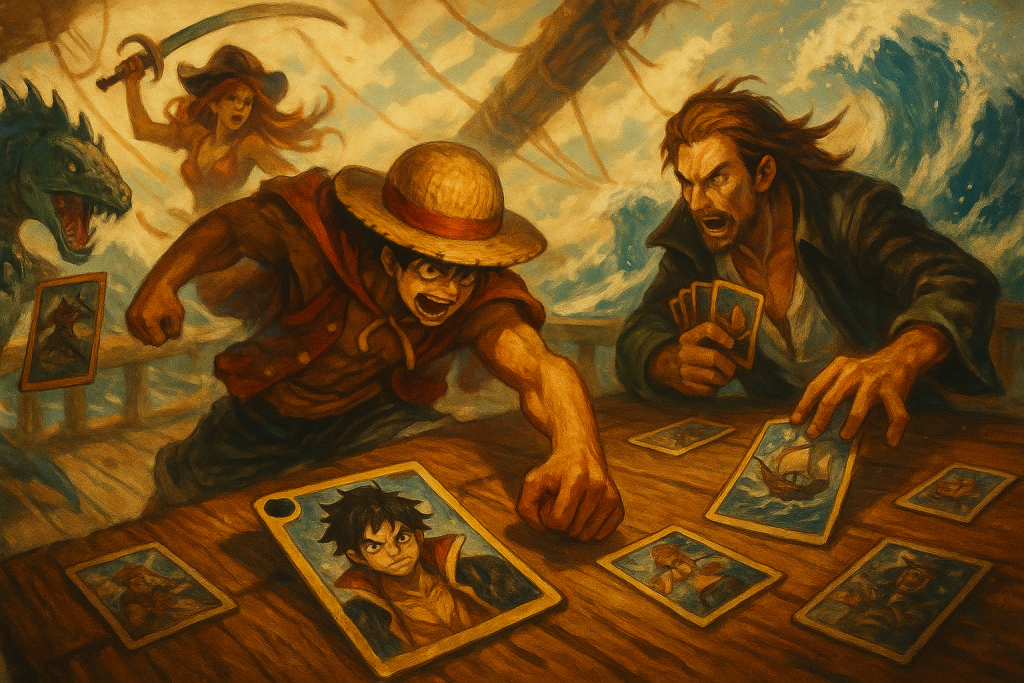
What to do: choose a leader first, then buy only the products and singles that support that exact deck. For whom: new players, returning players, and anyone tempted to buy sealed product before understanding deck identity. When not to use this approach: if the goal is collecting, sealed opening, or participating in prerelease play rather than building a stable constructed deck.
In One Piece Card Game, the leader is not just a mascot card. It defines your color access, often your deck’s central engine, and many of your card choices. A red aggressive leader and a blue control leader may both use powerful staples, but they play fundamentally different games. That means the right entry question is not “Which set should be opened?” but “Which leader fits the pace and decision-making style wanted?”
A practical beginner filter looks like this:
- Want straightforward pressure and easy attack sequencing? Look at red leaders that reward attacking and efficient tempo.
- Want board control and value through removal? Black leaders are often the cleanest entry point.
- Want resource manipulation, bounce, and hand sculpting? Blue is often appealing, though usually less forgiving.
- Want ramp and large threats? Purple is the classic choice.
- Want defensive bodies, life pressure management, or trigger-heavy play? Yellow is a common fit.
- Want resting effects, character pressure, and board-based combat tricks? Green remains a distinct identity.
If a local scene already has strong players, the easiest path is usually to start from a recent starter deck or an established budget shell for a known leader, then improve it with singles. That route is more reliable than trying to assemble a strategy from random boosters. Players still learning official terminology can also benefit from broader TCG fundamentals, including turn planning and sequencing discipline, as covered in TCG Terms Explained.
How to evaluate a leader before buying cards
Three questions matter more than raw popularity:
- How much does the leader ask you to track each turn? Some leaders need careful DON!! management, specific attack order, and combo timing. Others are much more linear.
- How dependent is the leader on expensive staples? A leader may be strong but only if supported by several set-defining secret rares or playsets of high-demand super rares.
- Does the leader still function when drawn off-curve? Some decks are extremely synergy-dependent. If the opener misses a key piece, the deck feels nonfunctional for beginners.
For first-event preparation, a leader with a clear plan is usually stronger than a technically better deck that creates constant sequencing mistakes.
Color identities in One Piece Card Game: what each color really asks you to do
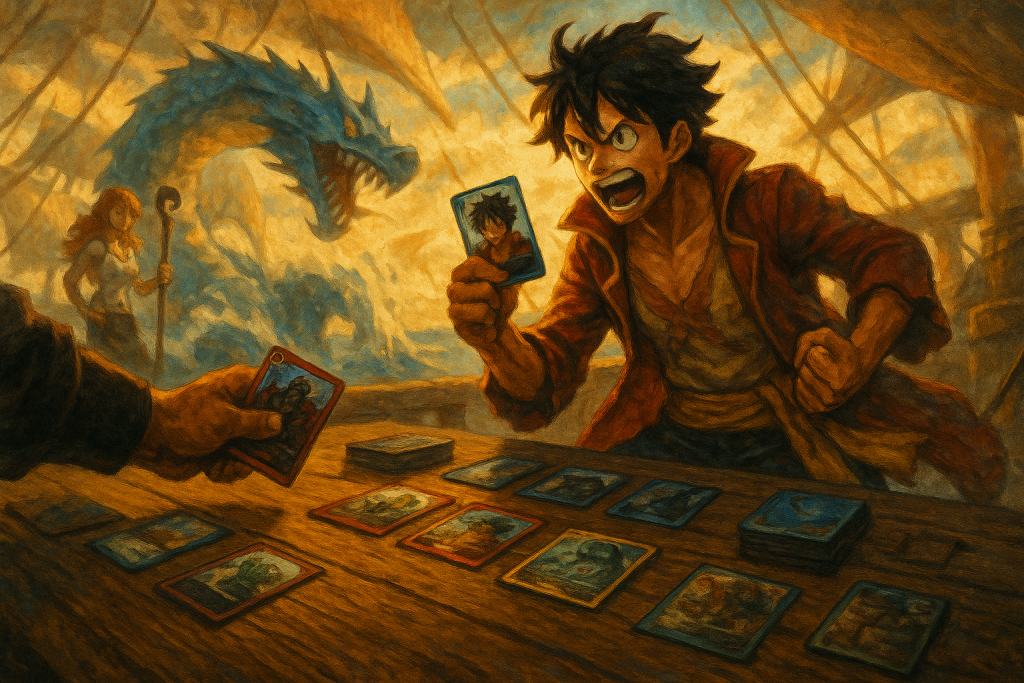
What to do: learn the color’s resource pattern before choosing cards. For whom: players choosing between multiple leaders or trying to understand why a borrowed deck feels awkward. When not to use this as a strict rule: multi-color leaders and newer releases sometimes blur traditional boundaries, so color identity should guide decisions rather than replace reading the exact card text.
Color identity in One Piece Card Game is practical, not abstract. It affects mulligans, DON!! commitments, attack sequencing, and what kinds of mistakes are punished.
Red: pressure, tempo, and clean aggression
Red usually rewards attacking efficiently, applying pressure early, and turning small stat edges into life damage. Many red lists force awkward counter decisions from the opponent and punish slow starts. This makes red attractive for beginners who want visible progress each turn.
Use red if: the goal is proactive play and faster rounds. Avoid red as a first choice if: the local meta is full of resilient late-game decks and the available list lacks premium aggressive staples.
Green: board positioning and rested-character exploitation
Green often plays around resting characters, selective control, and attack lines that reward understanding combat states. It can be powerful, but newer players sometimes mis-sequence attacks and miss windows where green gains its advantage.
Use green if: the appeal is tactical combat and board-centric play. Avoid green initially if: comfort with timing and sequencing is still low.
Blue: bounce, hand control, and flexible tempo
Blue commonly interacts with cost, returns characters to hand or deck, and can create strong tempo swings. It often feels clever and rewarding, but it also punishes unclear planning. A player who spends too many cards on short-term tricks can run out of meaningful pressure.
Use blue if: the goal is control with flexible responses. Avoid blue first if: the local field is unknown and the pilot still struggles to identify priority threats.
Purple: DON!! manipulation and big turns
Purple is built around changing the normal resource curve, often ramping into larger threats or spending DON!! in unusual ways. This creates explosive turns and powerful top-end options. It also creates self-punishing mistakes if DON!! is mismanaged.
Use purple if: the preference is ramp, combo turns, and impactful finishers. Avoid purple first if: there is not yet confidence in planning one to two turns ahead.
Black: cost-based removal and efficient control
Black frequently reduces cost and removes characters based on adjusted thresholds. It rewards understanding exactly which opposing body matters most and when to clear it. For many beginners, black is one of the easiest colors to understand because the game plan is tangible: survive efficiently, remove key pieces, and take over the board.
Use black if: the goal is stable interaction and clear removal benchmarks. Avoid black if: the preferred experience is fast aggression rather than reactive play.
Yellow: life manipulation, triggers, and swing turns
Yellow often turns life into a resource, gains value from triggers, and creates unpredictable pressure patterns. It can steal tempo and survive longer than expected, but it also produces more complex decisions around life total management, defensive holds, and trigger probability.
Use yellow if: the player enjoys defensive positioning and high-impact swings. Avoid yellow first if: variance feels frustrating or if precise life management is still uncomfortable.
As the card pool expands, hybrid and multicolor strategies matter more, but the easiest beginner habit remains the same: identify the main resource pattern of the deck before adjusting tech slots.
Deckbuilding flow that actually works for beginners
What to do: build from a known shell, test the core ratios, then change only the weak slots. For whom: anyone building a first legal list for locals. When not to use this exact method: if preparing for a sealed event, prerelease, or highly specialized local meta where standard lists are clearly misaligned.
Many new players waste money by upgrading everywhere at once. A stronger workflow is to treat deckbuilding as a sequence of checkpoints.
Step 1: confirm the legal leader and color package
One Piece Card Game deckbuilding is leader-locked. A standard deck uses one leader and a 50-card main deck that follows color restrictions based on that leader. Before buying upgrades, verify that every card is legal for the chosen leader’s color identity and current format expectations at the local level.
Step 2: define the deck’s win pattern in one sentence
If that sentence is unclear, the list is not ready. Examples:
- “Curve out early, keep pressure constant, and finish before larger engines stabilize.”
- “Control the board through cost reduction and removal, then win through superior board presence.”
- “Ramp safely, then dominate with large threats that smaller decks cannot answer efficiently.”
Every non-core card should support that sentence. If a tech card looks powerful but does not improve the main win pattern or a key matchup, cut it.
Step 3: lock the mandatory engine before choosing flexible cards
Most leaders have a package that is effectively non-negotiable: the best searchers, core characters, key events, and finishers. Those should be acquired first. Only after the engine is stable should the final slots be used on local answers such as extra removal, anti-aggro tools, or mirror-match technology.
Step 4: test curves and counter values, not just card names
A common beginner mistake is filling a deck with individually strong cards that produce clunky turns. In actual play, the feel of a One Piece list depends heavily on:
- Curve balance: too many high-cost cards creates dead early hands.
- Counter density: too few counter cards makes defense collapse.
- Search consistency: too few searchable targets weakens the engine.
- Event timing: too many reactive events can become unplayable in pressure matchups.
After three to five test matches, ask practical questions: Were hands often unplayable? Was DON!! left awkwardly unused? Were too many turns spent defending instead of advancing the plan? Those answers are more useful than whether a single flashy card won one game.
Step 5: buy singles to solve specific failures
Once testing shows the real problems, upgrade only those areas. If the deck loses because it cannot clear medium-sized blockers, purchase the cards that address that interaction. If the deck runs out of gas, upgrade search, draw, or recursion. Targeted buying is far more efficient than opening product hoping for a fix.
Players comparing costs across card games may find it useful to review broader market behavior in Why Are Trading Cards So Expensive?, especially when deciding between sealed products and singles.
Understanding the release roadmap: what to buy now, what to skip, and when timing matters
What to do: match purchases to the current release cycle and to the kind of event being entered in the next four to eight weeks. For whom: players trying to avoid outdated buys or panic purchases. When not to overemphasize roadmap timing: if the goal is purely casual play with a fixed playgroup that does not chase current competitive trends.
The One Piece Card Game ecosystem moves through recurring product waves: booster sets, starter decks, premium collections, tournament promos, and occasional reprint support. For beginners, the important point is not memorizing every set code. It is understanding that card value and deck viability are strongly tied to release windows.
How to think about recent and upcoming products
Use a simple hierarchy:
- Starter decks are often the best entry when they contain playable staples or a complete first shell.
- Main booster sets introduce the largest strategic changes and often define the metagame.
- Premium or collector-focused products may contain useful cards, but they are not usually the most efficient path to a first tournament deck.
- Promos can matter competitively, but only some are essential. Verify actual deck usage before paying premium prices.
For practical buying, ask three questions before purchasing any product:
- Does this product contain cards for the exact leader being built?
- Will those cards still matter after the next major set release?
- Is buying singles cheaper than chasing the product sealed?
If the answer to the third question is yes, sealed is usually the wrong tournament-prep purchase.
Why beginners should care about format transitions
The strongest deck this month may become merely average after the next major release, especially if a new leader creates a different speed benchmark or introduces better interaction. That does not mean beginners must constantly switch decks. It means expensive upgrades should be prioritized for cards that carry over across versions of the same color or archetype.
Examples of safer early investments include:
- staples used across multiple leaders in the same color,
- widely played searchers and defensive cards,
- generic top-end threats that remain relevant through more than one set cycle.
More fragile investments include narrow archetype pieces that only function in one exact build. Those are often the first cuts after a new release.
Practical first-event prep: how to show up ready for locals, Treasure Cup, or store-level competitive play
What to do: prepare the deck, the physical accessories, and the matchup plan separately. For whom: first-time event players and casual players moving into organized play. When not to use the full checklist: very casual learning nights where deck legality and round structure are relaxed.
A surprising number of losses happen before round one: missing sleeves, an illegal count, no side notes for pairings and results, weak understanding of timing, or mental overload from trying to memorize every matchup. The best first-event prep is narrow and repeatable.
Physical checklist for the night before
- Leader card and exactly 50 sleeved main-deck cards
- 10 DON!! cards or official DON!! deck equivalent as needed for play setup
- Clean sleeves in matching condition
- Playmat, damage markers or note method if used locally, and water
- Bandai TCG+ account readiness if event registration requires it
- Basic understanding of round timing, result slips, and local store procedures
Even at locals, neat board state management matters. One Piece can create layered game states involving rested and active characters, attached DON!!, trigger resolution, and cost changes. A tidy play area prevents avoidable judge calls and self-inflicted mistakes.
Matchup prep for a first event
Do not try to master every deck in the format. For a first tournament, identify only these:
- The fast deck that tries to pressure life early
- The control deck that removes your board and wins slowly
- The midrange deck that fights for board while keeping efficient attacks
- The mirror or near-mirror if your leader is popular locally
For each one, write one sentence on mulligan priorities and one sentence on what must be protected. That is enough to create a usable event plan.
Scenario: first local with a starter-based black deck
A beginner arrives with a black leader built from a starter deck plus singles. The local room includes red aggro, purple ramp, and another black control list. The best preparation is not adding random tech cards at the last second. The better plan is:
- mulligan for early playable bodies and core removal pieces,
- avoid spending premium removal on low-value targets against red,
- pressure purple before the large top-end turn arrives,
- save key answers for the cards that define the mirror.
This kind of prep wins more games than minor rarity upgrades.
Scenario: switching from casual yellow play to a larger event
A yellow player who succeeds in casual games may hit problems in a more structured event because opponents understand trigger ranges and sequence around life pressure more carefully. The right adjustment is not abandoning yellow immediately. It is tightening defensive holds, identifying which life-trading patterns are safe in specific matchups, and reducing overly cute cards that only punish weak play.
Common beginner limitations and mistakes to expect early
What to do: identify whether losses come from deck choice, sequencing, or ecosystem misunderstandings. For whom: players frustrated after the first few events. When not to overreact: after one bad local result, since One Piece has enough variance that a small sample can mislead.
Most early losses come from a small group of repeatable problems.
Buying too broadly
New players often buy several starter decks, random packs, and scattered singles across multiple colors. The result is a collection without a functional tournament deck. The fix is to pause and consolidate around one leader for at least several weeks of testing.
Defending the wrong life too early
Beginners frequently overcommit cards to defend early life points, then run out of counter later when the real finishing turn arrives. Learning when to accept damage is one of the biggest skill jumps in the game.
Attaching DON!! without a turn plan
DON!! placement reveals and constrains the turn. Randomly stacking DON!! on the first attacker can remove later options. Before attaching, identify the intended attack order, event availability, and whether the turn is meant to pressure life or clear board.
Confusing online meta talk with local reality
A deck can dominate online discussion and still be the wrong choice for a local scene with different budgets, preferences, or card availability. Beginners should track local win patterns first, then compare them to broader metagame reports.
FAQ
Is One Piece Card Game beginner-friendly compared to other TCGs?
Yes, especially at the rules level. The core turn structure is approachable, and starter decks provide a clean entry point. The main difficulty comes later from sequencing, DON!! management, and matchup knowledge rather than from raw rules complexity.
Should a new player buy booster boxes or singles?
If the goal is building a specific deck for play, singles are usually the better value. Booster boxes make more sense for collecting, trading, prerelease excitement, or building a broader pool over time.
Which color is best for a first deck?
There is no universal answer, but black and straightforward red strategies are often easier first entries because their plans are clearer. Purple and blue can be excellent choices too, but they usually punish planning mistakes more sharply.
How often does the metagame change?
Meaningfully, it usually shifts around new set releases, new starter products, important promos, and major tournament results. Smaller local changes happen constantly as players react to each other’s lists.
Do players need the most expensive deck to compete at locals?
No. A tuned, familiar deck piloted cleanly is often better at local level than an expensive top-tier list played with weak sequencing. Early improvement usually comes from repetition and matchup understanding, not from max rarity upgrades.
What is the safest way to upgrade over time?
Upgrade in layers: first the mandatory engine, then consistency pieces, then matchup tools, then premium flex cards. This keeps the deck playable at every stage and reduces wasted purchases when the format changes.
Conclusion: the easiest way into the ecosystem is a focused one
The One Piece Card Game ecosystem becomes manageable as soon as it is approached in the right order. Start with a leader, understand the color’s real play pattern, build from a known shell, buy targeted singles instead of random sealed product, and prepare for the next actual event rather than for every theoretical matchup. That process saves money, shortens the learning curve, and produces better results faster than chasing hype.
For a beginner, the best first milestone is not owning every staple or predicting the entire release calendar. It is showing up to locals with a legal, coherent deck and a clear plan for the first three turns in common matchups. Once that foundation is in place, the rest of the One Piece Card Game world becomes much easier to navigate.
Links in this article
Illustration image sources
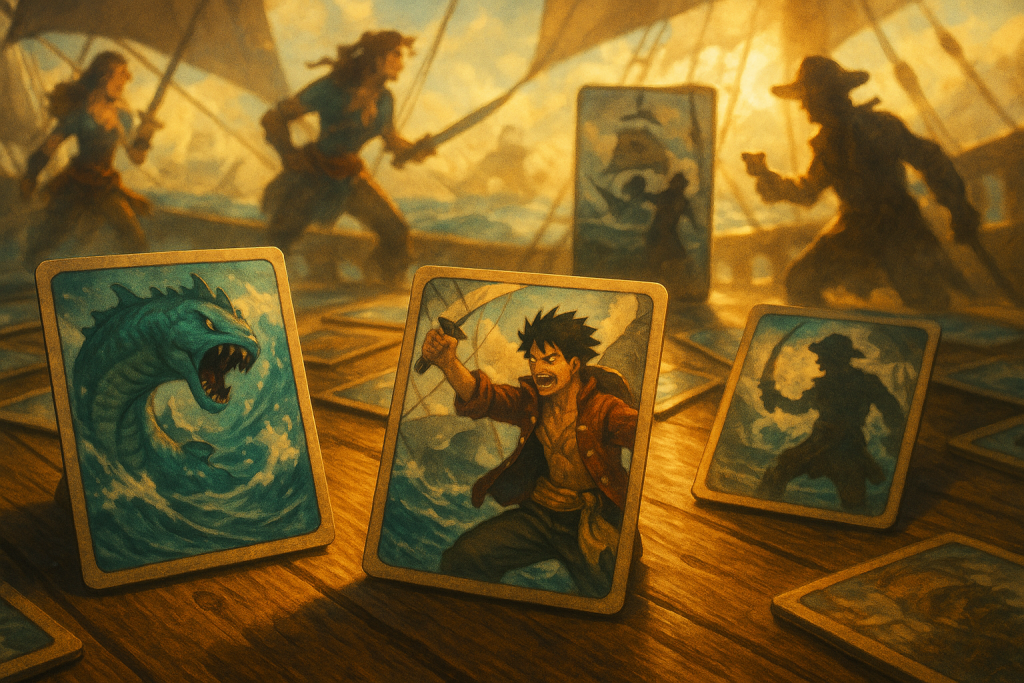
Custom illustration image was created using the OpenAI Images API.