One Piece Current Meta: What’s Hype vs. What’s Actually Tournament-Ready
The current One Piece Card Game meta moves fast, but not every deck that spikes online is actually built for a long tournament. A list can look unbeatable in a few showcase matches, crush casual locals for a week, or trend on social media because of one flashy combo. That does not automatically make it the right choice for a Regional, Treasure Cup, or a serious multi-round local where consistency, clock management, and matchup spread matter more than ceiling alone.
That gap between hype and tournament-ready is where many players lose percentage points before round one even starts. The strongest real-world One Piece TCG deck choices usually share the same traits: stable early turns, repeatable access to key cards, play patterns that survive disruption, and a realistic plan into the field rather than only into one target matchup. If a deck wins big only when it curves perfectly or only when opponents do not know the gimmick, it is probably hype. If it keeps posting results across events, pilots, and pairings, it is usually tournament-ready.
This article breaks down how to make that distinction in the current One Piece ecosystem. The focus is practical: what signals to trust, what warning signs to avoid, which deck types tend to hold up over long events, and how to test a list before committing entry fees and travel time. If you want a broader foundation first, start with Welcome to One Piece Card Game: A Friendly Guide to the World Behind the Cards. For a sharper deck-picking process, pair this guide with One Piece TCG: How to Read the State of the Game Before You Lock a Deck.
Why hype decks keep appearing in One Piece — and why that matters before a tournament

Hype decks are common in One Piece because the game rewards explosive sequencing and leader-specific power spikes. A new list can look incredible when it chains ideal DON!! usage, sees the exact searchers on time, and reaches its strongest turn before the opponent stabilizes. Video content also naturally favors these moments. A replay showing a leader like Rob Lucci, Enel, Roronoa Zoro, Sakazuki in older eras, or newer archetype shells hitting perfect curve tells a dramatic story. It does not show how often the same list misses a search target, clogs on reactive pieces, or struggles when forced off-script in game three of a grindy set.
As of early 2026, that matters even more because One Piece event prep is increasingly shaped by fast-moving online list sharing after Regionals, Treasure Cups, and flagship-store results. A shell that looks dominant in the first weekend after a breakout often faces a very different field two or three weeks later once players adjust counters, removal counts, and mulligan plans.
What to do: Before adopting any trending list, ask three direct questions: does it have a stable mulligan plan, does it function when the first search misses, and does it still win when it goes second into pressure? If the answer is unclear, the deck is probably still in the hype phase.
Who this is for: Players choosing a deck for events with six or more rounds, especially those without dozens of reps on a rogue strategy.
When not to use this lens alone: If the event is a small local with a narrow field, a high-variance deck can still be correct as a metagame call. Hype is a bigger problem in open-field events than in small known groups.
The difference between a strong deck and a tournament-ready deck
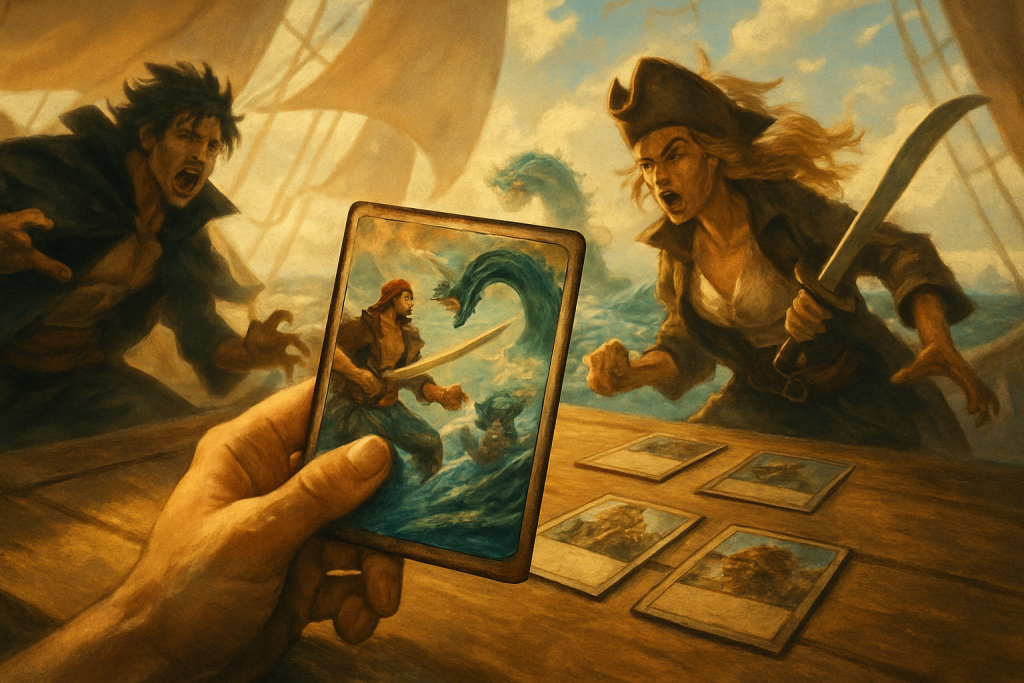
A strong deck can produce powerful turns. A tournament-ready deck does that repeatedly under pressure, across pairings, and through imperfect draws. In One Piece, that usually comes down to four measurable areas.
1. It has a real early-game plan
Many hyped lists are judged by their best midgame turns. Tournament-ready lists are judged by turns one through three. Can the deck contest board early? Can it pressure life without overcommitting? Can it leave DON!! open when needed? Leaders that naturally smooth these decisions tend to remain relevant longer than combo shells that need several exact pieces before doing anything meaningful.
Practical rule: If a deck’s first two turns frequently amount to “search and hope,” it needs exceptional payoff to justify tournament play.
2. Its core cards overlap in function
Reliable One Piece decks often have redundancy. Searchers find multiple good targets. removal cards answer more than one threat profile. Finishers are threatening even without the perfect setup. By contrast, hype decks often have narrow card packages that look unbeatable in ideal sequencing but become weak when drawn out of order.
Practical rule: Prefer lists where dead cards are rare and where the backup line still spends DON!! efficiently.
3. It can recover after disruption
In real events, opponents know what matters. They remove your cost-reduced body, pressure your hand, punish greedy attacks, and force awkward counter math. A deck that folds after one answered setup turn is not built for deep runs.
Practical rule: Test every list by asking what happens after the first key piece is removed immediately. If the deck’s plan becomes “draw the second copy fast,” that is a warning sign.
4. It closes games on time
Some One Piece decks are stronger on paper than on the round clock. Highly technical control mirrors, repeated resource loops, and decision-dense sequencing can convert a theoretically good matchup into unintentional draws or rushed endgames. Tournament-ready decks need a realistic pace.
Practical rule: Track not only win rate but average match length over at least 15 post-sideboard-equivalent sets of testing, even though One Piece uses best-of-one in many structures. The key question is whether the deck consistently reaches a clean finish without mental overload.
What tournament results actually signal in the current One Piece ecosystem
Results matter, but not all results mean the same thing. One undefeated local does not prove format durability. One streamed feature match does not prove consistency. Tournament readiness in One Piece is best identified through repeatability.
Better signals to trust:
- Multiple tops across different regions, not one isolated spike.
- Strong finishes from different pilots, not only one specialist.
- Lists with small card-by-card variation, which usually indicates a solved or near-solved core.
- Good conversion from Day 1 to top cut in larger events.
- A deck continuing to perform after players have adjusted tech cards against it.
Weaker signals that often create hype:
- A single dramatic winning list with many one-ofs and no follow-up results.
- Testing claims without event data.
- Combo videos that start from curated hands.
- Local dominance in a small community where opponents are unprepared for the gimmick.
For current search intent, it helps to think in concrete examples rather than generic “good decks.” In most modern One Piece formats, players are deciding between established value leaders, aggressive punish decks, and one or two breakout shells from the newest set. If a leader is still converting after two weekends of targeted hate, that is a stronger signal than a single first-place finish on release weekend.
What to do: When reviewing a successful One Piece deck, compare at least five recent event lists if possible. Identify the locked slots, the flex slots, and the side-grade choices made for specific local fields. If only the locked core stays the same and everything else is unstable, the deck may still be unsettled.
Who this is for: Competitive players preparing for Bandai Card Games Fest qualifiers, Regionals, Treasure Cups, flagship-store events, and larger independent tournaments.
When not to overvalue results: Right after a set release or restriction update. In those windows, raw innovation can outperform established lists temporarily because opponents do not know the matchup yet.
Which deck profiles are usually hype, and which ones are usually safe
This is not about naming one leader as always good or always bad. In One Piece, the same leader can move between “real contender” and “online hype” depending on support, bans, and the expected field. But certain deck profiles are predictably safer than others.
Hype profile: high-roll combo shells
These decks produce huge turns when they curve perfectly and access exact enablers on time. They often look strongest in isolated games and weakest across nine rounds. If they require specific search hits plus uncontested board development, they are risky unless the entire field is slow.
Use when: The event is small, the local meta is known, and opponents are underprepared.
Avoid when: The event is open-field and likely to include aggressive red decks, efficient black removal, or yellow life-pressure engines that punish setup turns.
Hype profile: anti-meta decks built for one target
These lists can be excellent if the target deck truly dominates the room. But many anti-meta choices become traps because they sacrifice too much against the rest of the field. Beating one top deck while being 40-60 into three others is not tournament-ready unless pairings are extremely predictable.
Use when: Reliable event data shows one leader or shell is massively overrepresented.
Avoid when: The format is wide and top tables include several viable leaders from different colors.
Safe profile: midrange decks with layered interaction
These are often the best long-event choices in One Piece. They can pressure, clear board, and adapt turn by turn. They usually benefit most from pilot skill because small choices around DON!! allocation, attack order, and resource preservation matter every round.
Use when: The field is unknown and a balanced matchup spread is more valuable than extreme polarization.
Avoid when: The format becomes so fast that a midrange deck’s flexible answers are too slow on rate.
Safe profile: proven control decks with efficient finishers
Control is only tournament-safe when it can stabilize without drawing the exact answer suite and when it has a credible way to end games. Some control leaders are genuinely elite in expert hands. Others are hype magnets because their win condition takes too long or because their answer package lines up poorly into a diverse field.
Use when: Matchup knowledge is deep and the pilot is comfortable making low-error decisions over many rounds.
Avoid when: Testing shows frequent time pressure, mental fatigue, or dependence on rare silver-bullet sequences.
How to judge current top One Piece contenders without falling for social-media narratives
The current One Piece environment regularly cycles through familiar categories: aggressive red pressure, black value/removal shells, yellow life-manipulation decks, blue tempo packages, green board-development engines, and multicolor leaders that exploit premium card pools. The exact best deck changes, but the evaluation method should stay stable.
In practical 2026 terms, most players are not choosing from twenty equally likely winners. They are usually narrowing the field to a handful of leaders that are posting repeated tops, a comfort pick they already know, and one breakout list from recent online results. That is why current-meta analysis should focus on conversion, stability, and pilot spread, not just raw buzz.
When a leader starts trending, ignore the first wave of “broken” claims and review these points instead:
- Mulligan clarity: Does the deck know what hands to keep in each matchup?
- Searcher quality: Are the search targets dense and broadly useful?
- Counter value: Does the list clog on too many low-counter engine pieces?
- Go-first/go-second balance: Does one side become dramatically worse?
- Removal resilience: Can it maintain pressure after key bodies are answered?
- Closing speed: Does it convert advantage into wins before opponents rebuild?
What to do: Build a simple deck-evaluation sheet and score each category from 1 to 5. Any list with multiple scores below 3 needs exceptional matchups to justify tournament registration.
Who this is for: Players deciding between established leaders and newer breakout shells after a set release.
When not to dismiss a new deck: If several strong pilots independently arrive at similar cores and the deck still performs after two to three weeks of adaptation, it is no longer just hype.
Practical tournament scenarios: how hype loses rounds and solid decks steal wins
Scenario 1: The flashy combo deck hits a bad mulligan
A player registers a trending combo list that needs a searcher plus a cost-cheat piece to unlock its strongest line. Round three starts with an awkward five-card hand containing two payoff cards, one narrow reactive card, and no smoothing. The deck can still technically function, but its turn progression is weak. Against a midrange opponent that attacks efficiently and removes the first setup body, the game ends before the combo deck reaches its ceiling.
Lesson: A deck that requires the mulligan to fix structural issues is not truly stable.
Scenario 2: The proven midrange deck wins an ugly game
A player on a well-tested black or multicolor midrange shell misses the ideal opener but still has overlapping cards: a searcher that finds several live targets, removal that answers both early aggression and midgame threats, and a finisher that is respectable even without maximum value. The game is messy, but the deck keeps spending DON!! efficiently and trades resources evenly until a small edge becomes lethal.
Lesson: Tournament-ready decks win non-ideal games more often than hype decks do.
Scenario 3: The anti-meta call pairings into the wrong room
A local field suggested that one yellow leader would dominate, so a player brings a highly targeted list full of cards tuned for that matchup. The actual event includes more red and black than expected. Suddenly the tech cards are low impact, the hand clogs, and the deck starts each round with effectively fewer live draws.
Lesson: A targeted metagame call is only as good as the forecast behind it.
Scenario 4: The control deck is strong but not practical
A pilot chooses a difficult control leader with good matchup numbers in testing. By round five, fatigue causes attack-order mistakes and suboptimal DON!! sequencing. Close games that should be wins become losses or end under time pressure.
Lesson: A deck’s tournament readiness includes mental load, not just card power.
A testing workflow that separates hype from real contenders in one week
The fastest way to identify real tournament options is to use a short, structured test cycle rather than open-ended laddering or random kitchen-table games.
Day 1: Build the matchup map
List the five to seven decks most likely to appear at the event. Include not only the most popular leader but also the secondary choices that often reach top tables because they punish overtargeting.
Output: A realistic gauntlet, not a fantasy field.
Day 2: Test bad hands on purpose
Do not only goldfish ideal curves. Play sets where each deck keeps one borderline hand per three games. This exposes whether the engine is inherently stable or just explosive when it curves cleanly.
Output: Real data on floor, not only ceiling.
Day 3: Swap pilots
If one player is much stronger on a deck, results can hide weaknesses. Switching pilots reveals whether the deck is broadly reliable or dependent on specialist familiarity.
Output: Better understanding of execution difficulty.
Day 4: Track dead cards and stranded DON!!
Every time a card is uncastable, low impact, or awkward in hand for multiple turns, mark it. Also note turns where the deck cannot use DON!! efficiently. Hype decks often look powerful while secretly wasting more resources than stable lists.
Output: A concrete cut list for flex slots.
Day 5: Play the post-adaptation set
Once both players know the matchup, replay it. This matters because many One Piece rogue decks gain wins from surprise value that disappears after opponents understand the pressure points.
Output: Data on whether the deck survives informed counterplay.
What to do: Commit to one 20- to 30-game sample per serious deck candidate. That is usually enough to eliminate weak choices even if it is not enough to solve every matchup.
Who this is for: Players with limited prep time before a Regional or Treasure Cup.
When not to overtest: If a deck already has extensive, repeated event success and your issue is mostly piloting. In that case, reps on one proven list are worth more than shallow testing on four decks.
If you are finalizing a list right before an event, a checklist approach also helps. The same logic used in other competitive TCG prep guides applies here: lock your 50, confirm your expected field, and avoid late panic swaps based on one fresh deck dump. That mindset is similar to a tournament-prep checklist, even if One Piece-specific card choices differ from games like Magic: The Gathering.
Deck selection rules for different One Piece player types
For newer competitive players
Choose a proven deck with a clear game plan and a balanced matchup spread. In One Piece, that usually means avoiding leaders that require highly specific sequencing knowledge or complex resource loops. A 53% deck that is easy to pilot cleanly is often better than a 56% deck that punishes every small mistake.
Best use case: First Regional, first major store championship, or re-entry into the game after a format shift.
Avoid: Rogue decks whose edge depends on hidden lines opponents have not seen before.
For experienced specialists
If a player already has deep reps with a leader, a slightly weaker raw meta position can still be worth registering. Familiarity improves mulligans, attack order, and matchup-specific DON!! planning. The key is being honest about whether the specialist edge is enough to offset structural weaknesses into the current field.
Best use case: A pilot with months of reps on a stable leader that remains at least defensible into top-tier decks.
Avoid: Forcing a comfort pick that now has several clearly bad popular matchups.
For local-metagame players
If the same ten to twenty players attend every week, sharper targeting becomes valid. A deck that is only fringe in the broader meta can be the best local choice if it farms the actual room.
Best use case: Recurring locals with predictable leader distribution.
Avoid: Translating the same list directly into a large open event without re-testing.
Limitations: what this framework does not solve
No evaluation method removes uncertainty completely. One Piece can shift quickly after a new set, a banlist update, or a breakout event result. A deck dismissed as hype can become real once its list is refined, and an established contender can decline once players over-tech against it.
There are also information limits. Public tournament data is not always complete, list publication can lag, and local fields vary sharply by region. Some leaders are underrepresented not because they are weak, but because they are expensive, difficult to pilot, or unpopular. That means raw representation alone should never be the only metric.
Finally, player skill still matters. A tournament-ready deck does not play itself. In One Piece, small mistakes in attack order, counter timing, and DON!! commitment change entire games. The goal is not to find a deck that eliminates decision-making. The goal is to avoid bringing a list whose structural flaws force unnecessary risk all day.
FAQ
How can a One Piece deck be hyped if it already won an event?
One event win proves a deck can succeed, not that it is broadly stable. The more useful question is whether it keeps winning after opponents expect it, test against it, and change their lists.
Should rogue decks always be avoided in One Piece tournaments?
No. Rogue decks are valid when they have a coherent plan, a strong floor, and a realistic matchup spread. The problem is not being rogue. The problem is being inconsistent.
Is it better to play the best deck or the most familiar deck?
Usually the best answer is the strongest deck within your practical execution range. If the format’s top deck is extremely punishing to pilot and reps are limited, a slightly weaker but familiar list can produce better results.
How many bad matchups can a tournament-ready deck afford?
That depends on field size and representation. In a wide-open event, one clearly bad matchup is manageable if the rest are close to favorable. Several bad popular matchups usually make the deck a poor choice.
Do online lists matter in One Piece?
Yes, but they need context. Use online lists to identify cores, common techs, and evolving ratios. Do not assume a list is solved just because it was shared widely.
Conclusion
In the current One Piece Card Game meta, hype usually comes from ceiling: explosive turns, dramatic clips, and narrow matchup dominance. Tournament readiness comes from floor and repeatability: stable openings, overlapping card functions, resilience after disruption, manageable round pace, and a matchup spread that makes sense for the actual event.
The best deck for a serious tournament is rarely the one that looks most broken in isolation. It is the one that still functions when the opener is average, when the opponent knows the matchup, when removal lands on time, and when round six starts to test focus. That is the correct standard for Regionals, Treasure Cups, flagship events, and any local where the goal is to convert preparation into a finish rather than into one flashy win.
If a One Piece list is trending, treat that as an invitation to verify, not a reason to register blindly. Check repeated results, map the matchups, stress-test the bad hands, and choose the deck that wins ugly games as well as clean ones. In this game, that is usually the line between hype and a real tournament-ready choice.
Links in this article
- Welcome to One Piece Card Game: A Friendly Guide to the World Behind the Cards
- One Piece TCG: How to Read the State of the Game Before You Lock a Deck
Illustration image sources
Custom illustration image was created using the OpenAI Images API.
Recommended reading
Lorcana Meta Buckets by Event Size: Locals vs Regionals vs Major Opens

Pokemon TCG Tournament Prep: Deckbuilding and Matchup Plan for 2026
Pokemon Budget Ladder 2026: From Starter List to Local-Ready Build in Three Upgrade Steps