
MTG Rules Update 2026: What Every Tournament Player Must Know
Magic: The Gathering tournament policy in 2026 is not defined by a single dramatic rewrite. The real shift is practical: judges and tournament organizers now expect players to handle registration, digital event workflows, communication, and board-state maintenance with far fewer avoidable errors. For competitive players, that means the biggest edge often comes from preventing penalties rather than trying to recover from them.
This article focuses on the real documents and workflows that govern sanctioned MTG events: the Magic Tournament Rules (MTR), the Infraction Procedure Guide (IPG), the Judging at Regular REL philosophy for local events, and the event infrastructure most players now use at RCQs, Regional Championships, MagicCons, and larger open tournaments. The goal is simple: understand what actually matters in 2026, what to do at the table, who needs to care most, and when a common shortcut is no longer worth the risk.
Players preparing for Modern, Pioneer, Standard, or Limited events should also keep current on format-specific metagame shifts and banlist context, because policy mistakes often happen under pressure in familiar matchups. For format hubs and event prep, Deck Insider’s MTG coverage and broader Deck Insider archive are useful starting points.
What actually changed for tournament players in 2026
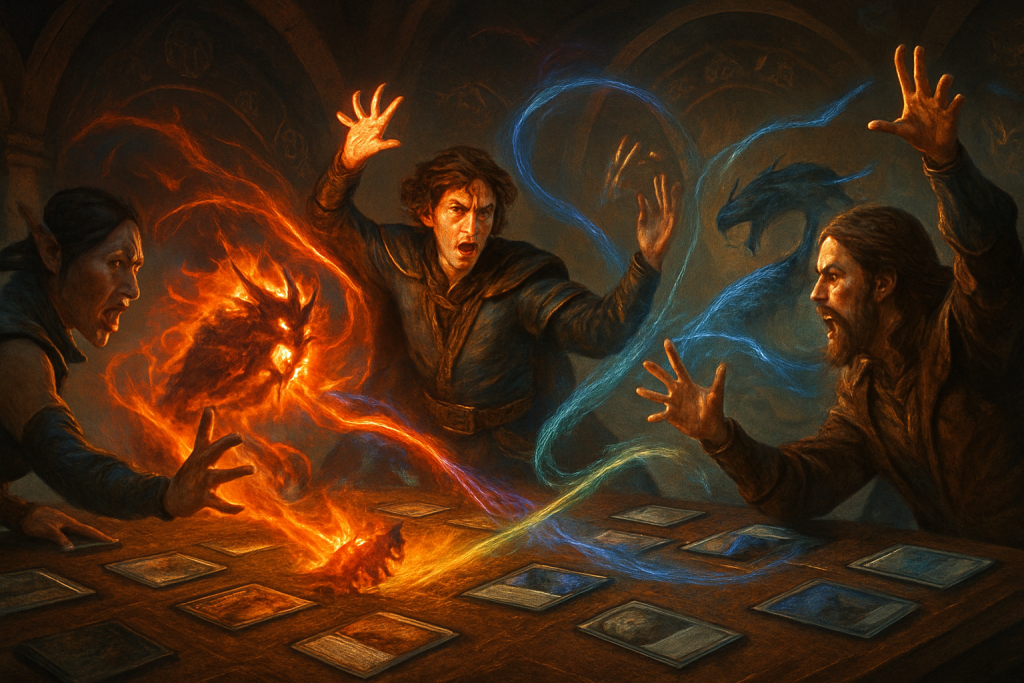
The most important point is that tournament policy in 2026 is about enforcement priorities and player workflow, not a brand-new rules engine. The Comprehensive Rules still govern gameplay. The MTR and IPG still govern sanctioned tournament procedure and penalties. What matters in practice is that events are now more consistently run around digital pairings, online deck submission, visible penalty tracking, and tighter expectations around self-management.
What to do: treat every Competitive REL event as if small administrative mistakes will be noticed. Double-check decklists, verify your deck after sideboarding every game, confirm round result entry, and call a judge early instead of trying to “fix” a situation informally.
For whom: this matters most for RCQ players, Regional Championship grinders, and anyone moving from FNM-level habits to Competitive REL.
When not to use old habits: do not rely on verbal shortcuts, memory-based sideboarding, or “we both know what happened” problem-solving in Competitive REL. Those habits are often acceptable socially, but they are exactly where avoidable penalties begin.
Why the impact feels bigger now
Three trends explain why players feel tournament policy more sharply in 2026 than a few years ago. First, decklists are checked more efficiently when submitted digitally. Second, digital pairings and result reporting reduce administrative confusion but make player responsibility more explicit. Third, judge staffing at many large events is very good at identifying recurring error patterns: missed mandatory actions, pace-of-play issues, and sloppy hidden-zone handling.
The result is not harsher Magic for its own sake. It is a cleaner event structure where preventable mistakes are less likely to be waved through.
Deck registration and decklist accuracy: the highest-value fix for most players

If one area produces the most preventable tournament losses, it is still deck registration. The practical standard in 2026 is simple: your submitted list must exactly match your physical deck and sideboard, and your card names must be unambiguous enough that judges can identify the intended list without guesswork.
What to do: submit decklists early, use full card names, separate maindeck and sideboard carefully, and perform a physical 75-card check before round one. After every sideboarded game, restore the deck to legal configuration before presenting for the next match.
For whom: especially important for players on split cards, modal double-faced cards, unusual one-of tutor targets, and decks that board in large transformational packages.
When not to cut corners: do not wait until the last minute to upload a decklist from memory on a phone. That is how players transpose sideboard counts, forget companion declarations, or enter outdated versions of a list.
Common decklist errors that still cost matches
- Registering 59 or 61 cards by mistake in Constructed.
- Listing the right card count but the wrong card name.
- Submitting a previous week’s sideboard version.
- Failing to restore the maindeck after sideboarding.
- Presenting a companion in a deck that no longer satisfies the deckbuilding restriction.
At Competitive REL, these are not “minor paperwork issues.” They often become Deck/Decklist Problems with real match impact. A clean workflow is better than trying to argue intent after the fact.
Practical scenario: sideboard restoration error
You finish game two of a Pioneer RCQ and quickly de-sideboard before game three. In the rush, one sideboard card remains in the maindeck, leaving the sideboard at 14. If this is caught after presentation or during the game, a judge call is mandatory.
Best action: stop immediately and call a judge as soon as the mismatch is noticed. Self-reporting does not erase the issue, but it usually prevents compounding errors and makes resolution cleaner.
Expected result: the judge corrects the deck to the registered configuration as policy requires. The practical lesson is that players should count sideboard cards physically, not mentally, before every game.
Communication policy: be precise with choices, targets, and game actions
2026 tournament play continues to reward technically precise communication. Most table disputes are not about obscure layers interactions. They come from players moving too fast through priority, combat, or spell resolution and assuming the opponent understood implied choices.
What to do: clearly announce targets, modes, values of X, attack steps, and end-of-turn intentions. Physically separate objects on the battlefield to show attachment, summoning sickness relevance, counters, and token identity.
For whom: combo players, Amulet Titan pilots, Storm players, graveyard deck players, and anyone using loops or high-density triggered abilities are most exposed here.
When not to rely on shortcuts: avoid compressed statements like “do the thing” or “same as last turn” when a game action requires a target, order, or choice. Tournament shortcuts exist, but they do not protect unclear play.
The high-risk moments
- Moving into combat without giving the opponent a realistic chance to act in beginning of combat.
- Casting a spell without naming all legal targets or declaring required modes.
- Resolving surveil, connive, discover, cascade, or similar sequencing too quickly for both players to track.
- Using tokens or dice that do not clearly represent game objects.
- Creating loops without stating the exact number of iterations and resulting game state.
Players who tidy up these habits reduce both judge calls and strategic leaks. Clear communication protects the player making the complex play just as much as the opponent.
Practical scenario: unclear shortcut in combat
An opponent says “combat?” and immediately turns creatures sideways. If you intended to act in beginning of combat, stop the sequence and clarify immediately. Do not wait until blockers.
Best action: say clearly, “In beginning of combat, before attackers, action.” If the sequence is disputed, call a judge right away.
Expected result: judges usually resolve these situations based on communication policy and established shortcuts, not on which player speaks louder. Early clarification matters.
Missed Triggers in 2026: still one of the most misunderstood penalty areas
Missed Trigger policy remains one of the most misunderstood parts of Competitive REL. The central principle is unchanged: players are responsible for their own triggered abilities, and not every forgotten trigger is handled the same way. Some triggers are generally considered detrimental; others are not. Some will be placed on the stack if caught in time; others will simply stay missed.
What to do: announce your relevant triggers as they happen, use visible markers for once-per-turn or upkeep triggers, and pause briefly at key transitions like untap, upkeep, draw, combat, and end step.
For whom: essential for players on Saga-heavy decks, energy-style resource tracking, prowess-like combat math, The One Ring protection windows, Fable of the Mirror-Breaker style value engines, and graveyard recursion shells.
When not to expect help: at Competitive REL, opponents are not required to remind you about most of your beneficial triggers. If your deck depends on repeated mandatory value, you need a system.
What counts as good trigger hygiene
- Put a die on top of the library for upkeep triggers.
- Place tokens or counters only after verbally acknowledging the trigger.
- Use distinct token markers for different creature sizes or abilities.
- When multiple triggers occur, state the order explicitly.
- Call a judge if there is any disagreement about whether a trigger was acknowledged in time.
This is especially important in paper events where board states become crowded quickly. Sloppy trigger handling is rarely a one-time issue; it usually compounds over a match.
Practical scenario: delayed recognition of a beneficial trigger
You attack, damage is dealt, both players move on, and only then you realize a beneficial combat-damage trigger from your creature was never acknowledged. At Competitive REL, that trigger may simply remain missed depending on timing and board progression.
Best action: do not retroactively change the game state yourself. Pause and call a judge.
Expected result: the judge determines whether the trigger was missed and whether any remedy applies. The practical takeaway is that players should announce triggers at the first visible moment, not after seeing whether they matter.
Hidden Card Error and card handling: small slips, big consequences
Hidden Card Error remains one of the most punishing categories because it involves information that cannot be perfectly reconstructed. Drawing an extra card, mixing a looked-at card into a hidden zone incorrectly, or resolving a tutor or cantrip in the wrong order can create game states that judges can only partially repair.
What to do: separate cards being looked at from cards being drawn, resolve one hidden-zone action at a time, and keep your library, hand, exile, and graveyard physically distinct.
For whom: especially relevant in Modern and Legacy-style high-cantrip environments, as well as Limited decks with frequent scry, discover, impulse draw, or selective search effects.
When not to multitask: do not carry on strategic conversation, side commentary, or life-total cleanup while resolving a hidden-card effect. Finish the effect cleanly first.
Typical Hidden Card Error traps
- Drawing before finishing a scry or surveil instruction.
- Picking up too many cards from the library and blending them into hand.
- Failing to reveal a searched-for card when required.
- Accidentally drawing for turn after already drawing from another effect.
- Putting an impulse-drawn card into hand instead of keeping it in the correct public or tracked zone.
These mistakes often happen when players are tired or rushing the clock. The fix is procedural discipline, not better memory.
Practical scenario: extra card drawn off a cantrip chain
You cast a spell, resolve a draw, then automatically draw for turn because the turn marker has already shifted in your mind. If the extra card has joined your hand, the issue is serious.
Best action: call a judge immediately and identify the exact sequence without touching your hand further.
Expected result: the judge applies the relevant policy, which may involve the opponent selecting a card from the hidden set depending on the precise infraction. The lesson is straightforward: verbalize each draw source and pause before touching the library.
Pace of play and Slow Play enforcement: where many clean technical players still lose equity
One of the clearest practical trends heading into 2026 is more consistent pace-of-play enforcement. Judges are not penalizing players for thinking. They are penalizing players who consume excessive time without meaningful progression, especially in repetitive board states or after obvious decision points.
What to do: make default plays faster, sideboard with a plan already prepared, and maintain visible tempo in shuffling, presenting, mulligan decisions, and tutor resolutions.
For whom: control players, midrange mirrors, toolbox decks, and newer Competitive REL players are most at risk.
When not to tank: if the decision tree is routine or repeated, extended deliberation is dangerous. Save deep tanking for truly match-defining spots.
Where judges notice Slow Play most often
- Long pregame sideboarding with no clear plan.
- Repeatedly recounting mana or graveyards without acting.
- Over-searching the library after fetches or tutors.
- Taking too long to choose obvious mulligan keeps or sends.
- Using the match clock strategically rather than trying to complete the game.
Players who think they “play fast enough” often discover the problem only when they are already in extra turns. A real tournament routine should include a clock-awareness habit every five to ten minutes.
Practical scenario: sideboarding drift in game two
You lose game one of Modern, open your sideboard guide, and spend three minutes reconsidering every slot because your opponent showed an unusual package.
Best action: have prebuilt sideboard maps with one adjustment layer for surprises, not a full rebuild from scratch.
Expected result: faster presentation, more time for actual gameplay, and lower risk of both Slow Play pressure and sideboard registration mistakes.
Outside Assistance, notes, and digital devices: the line is clearer than many players think
As tournament operations become more digital, players need to stay disciplined about what devices are for and when they may be used. Pairings, standings, and event software are normal. Strategic help during a match is not. Neither is accessing unauthorized notes or external information mid-match beyond what tournament policy allows.
What to do: keep your phone off the table unless tournament procedure requires it, use only allowed notes taken before the match or brief notes made during the match, and never consult sideboard guides or matchup charts during active games unless explicitly permitted by policy for that specific context.
For whom: this matters most at RCQs, Regional Championships, and large open events where note-taking practices vary and enforcement is tighter.
When not to assume permissibility: if there is any doubt about whether something counts as outside information, ask a judge before the round or before accessing it.
High-risk behavior to avoid
- Checking messages during a match.
- Looking up oracle text on a phone instead of calling a judge.
- Opening a sideboard app between games without confirming policy.
- Talking through lines with a friend while a match result is still unresolved.
- Leaving notes exposed where they can influence in-game decisions improperly.
The easy rule is this: when in doubt, judge first, device second.
Digital pairings and event software: smoother events, but more player responsibility
By 2026, many sanctioned paper events rely heavily on digital pairings, online seatings, result entry workflows, and decklist platforms. This makes tournaments faster, but it shifts more responsibility onto players to verify their own administrative status.
What to do: confirm your seat, opponent, and result submission every round; screenshot pairings if the venue signal is unstable; and report app issues immediately rather than assuming the organizer will notice.
For whom: everyone at larger events, especially players traveling to unfamiliar venues or international events where connectivity and language issues can slow down fixes.
When not to rely on the app alone: if pairings appear wrong, standings do not update, or your table assignment conflicts with posted information, go to staff immediately.
Practical scenario: incorrect result entered
Your opponent submits a 2-1 result in the app, but the winner is reversed. You notice after leaving the table area.
Best action: contact a judge or scorekeeper immediately with the round number, table, and both players present if possible.
Expected result: early correction is usually straightforward; late discovery can be much harder once the next round is generated. Always verify before walking away.
How to build a 2026 tournament routine that prevents penalties
The best adaptation to current MTG tournament policy is not memorizing every line of the IPG. It is using a repeatable routine that blocks common errors before they happen.
What to do: use a simple checklist before round one, before each game, and before signing the result slip or confirming the app entry.
For whom: every tournament player, but especially anyone entering multiple RCQs, two-day events, or long Limited tournaments where fatigue amplifies mistakes.
When not to improvise: do not rely on memory deep into round six or on day two. Routine beats confidence.
Suggested pre-round checklist
- Main deck and sideboard count correct.
- Tokens, dice, pen, and paper ready.
- Phone silenced and put away.
- Water and snacks handled before sitting down.
- Seat assignment and opponent confirmed.
Suggested in-match checklist
- Announce triggers clearly.
- Track life totals on paper.
- Resolve one hidden-zone action at a time.
- Maintain pace during shuffles and searches.
- Call a judge early for any dispute.
Suggested post-match checklist
- Verify result before submission.
- Restore sideboard immediately.
- Collect all cards, tokens, and notes.
- Check next-round timing and location.
Players working on broader competitive preparation can pair this with metagame and testing coverage from the Deck Insider MTG section.
Limitations: what this article cannot replace
This guide explains the practical impact of tournament policy in 2026, but it does not replace the official documents or live judge rulings. Exact remedies depend on timing, public information, hidden information, and the Rules Enforcement Level of the event. A situation handled one way at Regular REL may be treated very differently at Competitive REL.
What to do: before an important event, review the current MTR and IPG, and assume that card-specific interactions still require rules knowledge beyond tournament policy alone.
For whom: especially important for players entering their first RCQ season, large Team events, or unfamiliar formats.
When not to rely on summaries: do not use a strategy article, social media thread, or memory of a prior ruling as your final authority during an active event. Call a judge.
FAQ
Are there entirely new MTG tournament rules for 2026?
Not in the sense of a full replacement system. The major practical change is stricter and more consistent application of existing tournament policy through digital workflows, better event administration, and stronger player expectations around precision.
What is the most important habit to improve before a Competitive REL event?
Deck and sideboard verification is the highest-value fix for many players. After that, the biggest gains come from clean trigger communication, disciplined hidden-card handling, and better pace management.
Can a player use a phone to check card text during a match?
Do not assume yes. In a sanctioned match, the safest action is to call a judge for oracle text or rules clarification. Device use can create outside-assistance concerns depending on context.
Do opponents have to remind each other about triggers?
At Competitive REL, players are generally responsible for their own beneficial triggers. Do not depend on the opponent to help maintain your engine.
What should happen if a player notices a mistake after it occurred?
Stop, preserve the current game state as much as possible, and call a judge immediately. Trying to repair the issue without a judge often makes the ruling worse.
Are digital pairings safer than paper pairings?
Usually yes, but only if players verify assignments and results themselves. The main risk is assuming the app is correct without checking seatings or final match entry.
Conclusion
For tournament MTG in 2026, the edge is no longer just technical play and matchup knowledge. It is procedural accuracy under pressure. Players who submit clean decklists, communicate game actions precisely, manage triggers visibly, avoid hidden-card errors, and keep a steady pace will convert more close matches simply by avoiding preventable losses.
The practical rule is simple: treat tournament policy as part of gameplay. Call judges early, verify everything that affects the match record, and build routines that still work when tired. In a long RCQ season or a major open event, that discipline matters as much as one sideboard slot or one extra test session.
Links in this article
Illustration image sources
Custom illustration image was created using the OpenAI Images API.