How Story and Franchise Lore Influence Card Design in One Piece and Lorcana
In the One Piece Card Game and Disney Lorcana, story is not just packaging. Lore directly influences card effects, color identity, trait lines, support packages, deck cohesion, and set-by-set release priorities. For players, that matters because understanding the franchise logic behind a card pool can improve early deck evaluation, help predict future support, and explain why some archetypes get unusually tight internal synergy while others remain broad toolboxes.
The practical question is not whether lore matters. It is how much weight to give it when building decks, buying into an archetype, or preparing for events. In One Piece, factions such as Straw Hat Crew, Navy, Donquixote Pirates, Animal Kingdom Pirates, and Revolutionary Army often receive support that mirrors narrative roles and alliances. In Lorcana, character versions, songs, ink identities, and franchise grouping create design patterns that reward players who understand Disney source material without requiring encyclopedic lore knowledge. The key is using lore as a prediction tool, not mistaking it for a power ranking.
This article focuses on one core intent: how to use story and franchise lore to make better real-world TCG decisions in One Piece and Lorcana. It covers what lore changes in card design, when lore-based assumptions are useful, when they mislead, and how locals players, collectors, and tournament grinders should act on those differences. If you want to sanity-check those lore reads against current competitive trends, compare them with broader meta analysis and game-specific coverage before locking a list.
Why lore matters in card design: use it to predict synergy, not raw power
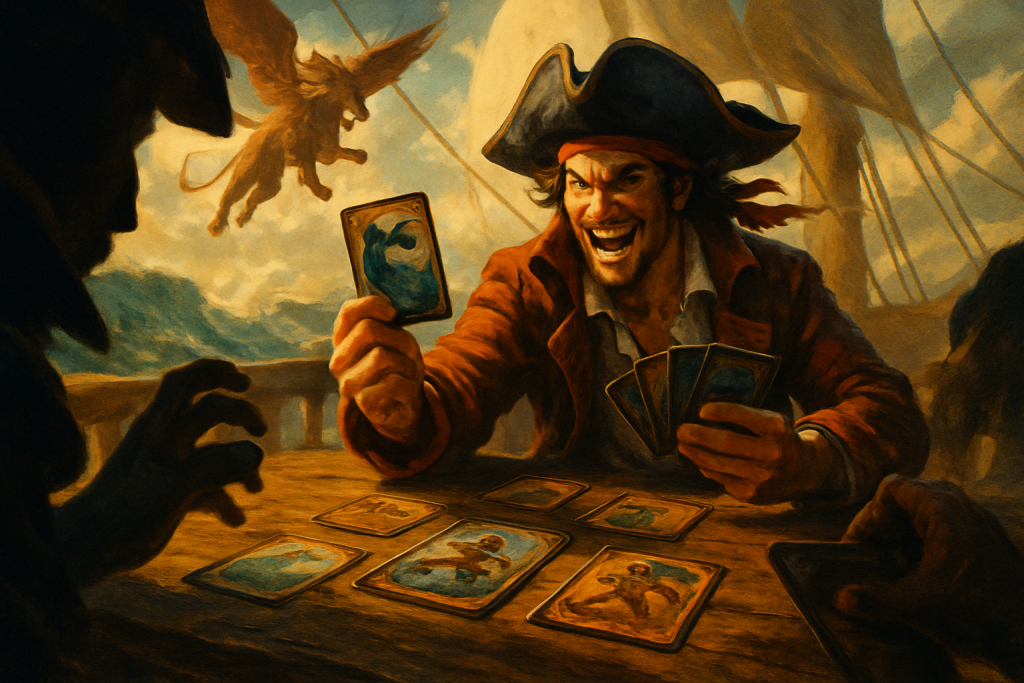
What to do: When evaluating previews or a new set release, first sort cards by faction, trait, named character family, and source-story role, then ask whether the game historically rewards those links with searchable support, leader compatibility, or mechanic overlap.
For whom: Best for players deciding whether to invest in a new archetype before full tournament results exist, especially for prerelease, week-one locals, and early testing gauntlets.
When not to use: Do not use lore alone to choose a deck for a major event after results data is available. At that point, matchup spread and consistency matter more than thematic cohesion.
Both games use intellectual property differently from mechanically original TCGs. In One Piece, a card rarely exists in a vacuum. Traits such as Straw Hat Crew, Navy, Big Mom Pirates, and Land of Wano often signal future compatibility. In Lorcana, cards tied to a film, character identity, or song subtype often reveal intended package structure. A player who sees a new flood of Madrigal cards, Seven Dwarfs support, or princess-adjacent synergies can reasonably infer that designers want those cards to cohere beyond flavor.
The first decision framework is simple:
- Choose lore-led evaluation when a set is newly revealed, trait density is high, and the archetype needs dedicated names to function.
- Choose results-led evaluation when the format has settled, top-cut data exists, and generically efficient cards outperform tighter lore packages.
In One Piece, this distinction is visible whenever a leader heavily references a faction. A new Monkey.D.Luffy leader or a Navy-focused leader can make previously mediocre in-faction cards playable because lore-linked trait support becomes mechanically real. In Lorcana, a character receiving multiple versions across sets can indicate a long-term mechanical identity. That often matters for future-proofing purchases and testing priorities more than for immediate tier placement.
Next step: Before the next set review, build a spreadsheet with four columns: faction/franchise cluster, searchable support, payoff cards, and generic staples that compete with the lore package.
One Piece Card Game: how manga and anime lore shape traits, leaders, and combat patterns
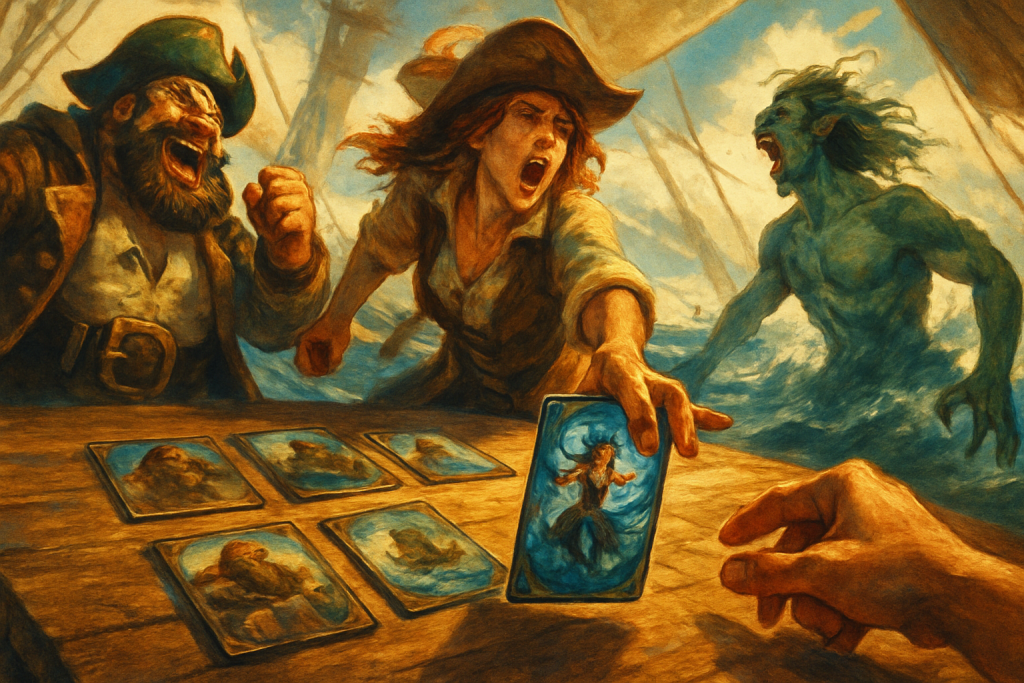
What to do: Read One Piece cards through three lenses: leader identity, trait line density, and narrative combat role. That reveals whether a card is designed as engine glue, a faction payoff, or a standalone rate card.
For whom: Most useful for players building around leaders instead of importing stock lists card-for-card.
When not to use: Less useful when playing solved high-tier lists where individual card slots are already optimized around curve and matchup math.
Traits are not flavor text in One Piece
One Piece often turns story factions into deckbuilding infrastructure. A Straw Hat Crew card may interact with searchers or leader text that excludes non-Straw Hat options. A Navy card can gain access to cost manipulation, control tools, or synergy pieces because the faction is built to feel organized and authoritative. Donquixote Pirates support has historically leaned toward cohesion and tactical sequencing, while Animal Kingdom Pirates cards often express size, pressure, or DON!! acceleration patterns that match the faction’s on-screen identity.
This matters in practice because trait-locked support raises the value of on-theme cards beyond their printed stats. A 4-cost character with average numbers may become a core inclusion if it is searchable, reusable, and enabled by leader text. Players who ignore lore-linked trait architecture often misread why certain cards overperform.
Concrete examples help here. Straw Hat shells often gain value from cheap searchers and broad character density because leader text and support pieces reward staying inside the tag. Navy decks, by contrast, commonly turn cost-reduction plus removal into a complete control package, so an otherwise modest body becomes playable if it fits the removal math. That is why faction context matters more than reading a single card in isolation. For a broader read on what is actually converting, compare lore theory with what’s hype versus what’s tournament-ready in the current One Piece meta.
Leader design mirrors narrative perspective
Leaders in One Piece frequently represent how a faction fights in the story. Luffy leaders tend to reward pressure, tempo swings, or flexible aggression. Trafalgar Law leaders often emphasize repositioning, sequencing, or field manipulation. Big Mom-themed leaders can lean toward durability, life pressure, and inevitability. This does not mean every version plays the same way, but the narrative silhouette usually survives across designs.
That gives players a second practical framework:
- Choose faction-loyal builds when the leader text explicitly rewards named traits, search consistency, or in-house event cards.
- Choose hybrid good-stuff builds when the leader has broad text, the color pair offers exceptional staples, and the trait package lacks enough high-quality curve plays.
For example, if a Navy shell gets efficient search, removal scaling, and sticky midgame bodies, staying on-trait is usually correct. If a leader only loosely references a faction and black, purple, or yellow staples offer stronger universal value, forcing lore purity can reduce win rate.
Story moments become mechanics players can exploit
One Piece also translates iconic scenes into play patterns. Cards based on finishers, transformations, rescues, or dramatic reversals often receive effects that mimic those scenes: sudden power spikes, KO effects, life manipulation, rested-state punishment, or resource cheating. This is useful during preview season because dramatic source moments are more likely to become splashy payoff cards than low-impact fillers.
Current-context guidance: when a new set is revealed, cards tied to major saga climaxes or fan-favorite combatants often deserve earlier testing than secondary lore pieces, especially if they sit in colors already supported by top leaders. In practice, that means checking whether the shell already has search, curve stability, and enough playable 2-cost to 5-cost options to support the flashy top end. That does not guarantee tier-one results, but it does improve testing efficiency.
For broader One Piece metagame context and deck coverage, use Deck Insider’s One Piece Card Game guide and learn how to read the state of the game before you lock a deck to cross-check lore-driven theory against current lists and event discussion.
Next step: When reviewing a One Piece spoiler, mark every card as one of three types: trait enabler, leader payoff, or standalone staple. Test trait enablers only if at least eight to twelve other cards in the shell reward the same tag.
Lorcana: Disney storytelling influences ink identity, songs, and character versions
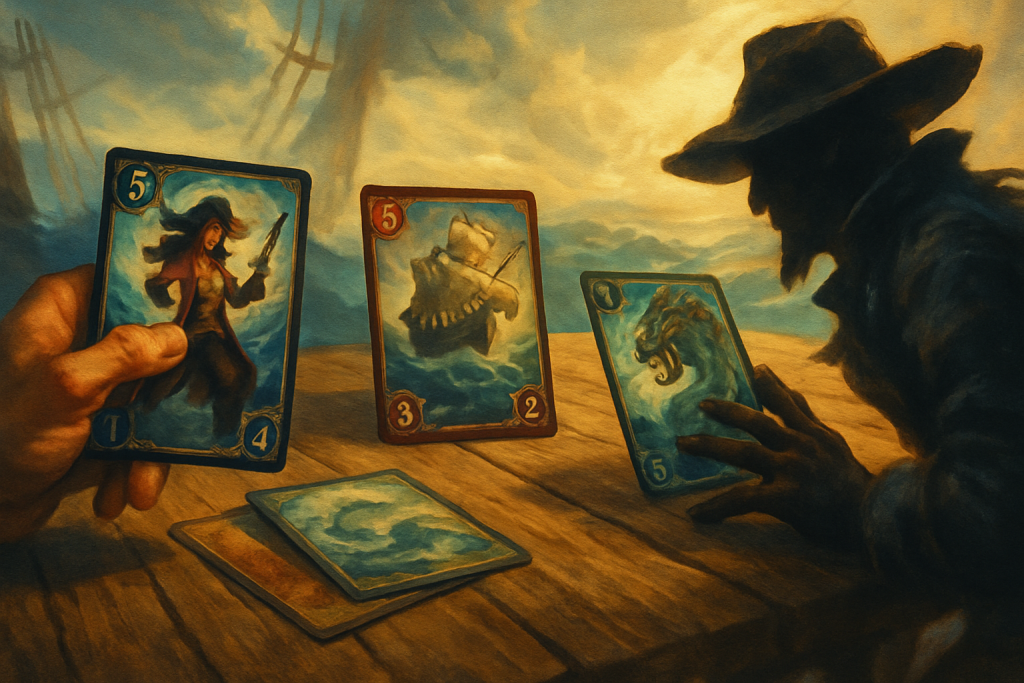
What to do: In Lorcana, evaluate cards by franchise cluster, version continuity, and subtype relevance, especially songs and character families that recur across sets.
For whom: Best for players trying to identify which Disney properties are most likely to receive sustainable support over multiple sets.
When not to use: Do not overcommit to a franchise package if the best competitive lists in your format are built on ink-pair fundamentals rather than movie-specific synergy.
Ink identity carries flavor into gameplay
Lorcana’s six inks do more than divide mechanics. They also express Disney-style storytelling roles. Amber frequently supports healing, character swarming, and songs. Amethyst often leans into card flow, magic, and tricky board play. Ruby channels removal and dramatic swing turns. Steel emphasizes damage and combat pressure. Sapphire supports ramp and items. Emerald leans into disruption, evasion, and tempo. These are mechanical realities, but they also map cleanly onto franchise presentation.
That connection helps players read preview cards more accurately. A new villain in Emerald is more likely to disrupt than simply out-stat the board. A musical property landing in Amber or Amethyst may be a stronger candidate for song-based synergy than the same character in another ink. Lore does not replace rules text, but it frequently indicates the kind of rules text a card will get.
Character versions create long-term design arcs
One of Lorcana’s most important lore-design bridges is the multiple-version character model. Characters such as Elsa, Mickey Mouse, Stitch, Ariel, and Ursula often appear across sets with effects that reinforce a recognizable role. Elsa tends to interact with exertion and control space. Stitch has supported aggressive or card-advantage angles depending on version. Ariel and song decks create obvious links between source material and game action.
For deckbuilders, this means repeated characters are often safer medium-term investments than one-off thematic packages. If a character has multiple strong versions already, future synergy is easier to imagine than for a minor side character with no established design lane. If you are building for locals rather than broad theory, it also helps to compare those lore packages against a practical competitive Lorcana game plan for new players.
Songs are the clearest example of lore becoming mechanics
Lorcana songs are not merely references to famous scenes. They are a structural mechanic that converts Disney’s musical identity into cost efficiency and deckbuilding incentives. Characters singing songs for reduced or alternate payment turns franchise flavor into one of the game’s most distinct tactical systems. That has direct competitive impact: if a set increases song density for a particular ink pair or franchise cluster, existing singers and tempo shells may gain value immediately.
Players tracking Lorcana deck evolution should compare lore packages against current ink-pair foundations. Deck Insider’s Lorcana deckbuilding framework is a useful check for whether a film-specific idea is becoming a real competitive shell or remains mostly thematic.
Next step: When assessing Lorcana spoilers, separate cards into franchise flavor pieces and infrastructure pieces. Prioritize infrastructure first: singers, card draw, removal, lore acceleration, and flexible interaction.
How to use lore for deckbuilding decisions at locals, set release, and major events
What to do: Adjust how much trust you place in lore depending on the event stage: locals, release-week events, or high-stakes tournaments.
For whom: Useful for players balancing budget, fun, and win rate across different levels of competition.
When not to use: If your goal is strictly maximum expected value at a major event, do not privilege favorite characters or factions over matchup-tested lists.
Scenario 1: release-week testing in One Piece
A new One Piece set introduces several Egghead or Wano-linked cards and a leader that rewards those traits. In week one, lore is a legitimate shortcut because trait concentration often predicts whether the shell will feel coherent. The practical move is to build the first draft mostly on-trait, then identify which slots are underperforming and only then test off-theme staples. Starting with a generic pile misses the reason the archetype exists.
Result: faster identification of whether the faction shell has enough search, curve stability, and payoff density to survive beyond novelty week.
Scenario 2: locals preparation in Lorcana
A local metagame contains many franchise-driven lists because players enjoy building around Frozen, The Little Mermaid, or villain packages. In this environment, lore knowledge helps with matchup prep. If a song-heavy Ariel shell is common, prioritize anti-tempo lines, hand pressure, or removal that punishes setup turns. If a Seven Dwarfs-style package appears, expect board compression and role-player stacking rather than isolated bombs.
Result: better mulligan decisions and fewer losses to predictable synergy turns.
Scenario 3: regional or championship-level preparation
At higher-level events, lore becomes a secondary filter. The right process is: first identify the best-performing archetypes, then ask whether lore-linked support explains their consistency or future resilience. In One Piece, a faction deck with dense searchable pieces may be a better long event choice than a less cohesive good-stuff shell if both have similar win rates in testing. In Lorcana, an ink pair with strong song infrastructure and repeated character support may hold up better through adaptation than a single-set gimmick.
Result: a sharper distinction between decks that spiked one event and decks with repeatable structural strength. For practical event prep, use the site’s tournament prep coverage to turn these lore reads into actual testing plans.
Next step: Define your event type before testing. For locals, allow more lore-driven experimentation. For regionals, require every thematic inclusion to beat a generic alternative on consistency or matchup utility.
What lore can and cannot tell you about future support
What to do: Use lore to estimate support probability, not exact power level or release timing.
For whom: Especially relevant for players deciding whether to buy staples now, hold sealed product, or keep partially built archetypes together.
When not to use: Do not make expensive speculation decisions on lore alone if official previews, rotation policies, errata, or banlist pressure point the other way.
In both games, popular characters and central story arcs are more likely to return than minor one-scene references. In One Piece, major crews, Marines, major arcs, and flagship characters predictably reappear. In Lorcana, cornerstone Disney characters and major film identities are natural candidates for repeat printings and alternate mechanical versions. That makes lore useful for identifying safe support zones.
But there are hard limits. Designers also balance color needs, set themes, product cadence, and format health. A beloved character can receive a weak card. A low-profile character can become competitively important because the mechanic needs a missing piece. Franchise prominence increases design attention, not guaranteed tournament relevance.
Current-context guidance: if a card’s value depends on future support, favor archetypes with existing playable cores over archetypes that are “one more set away.” In both One Piece and Lorcana, waiting for hypothetical support ties up budget and testing time that could be used on proven shells.
Next step: Before buying into a lore-heavy strategy, ask one hard question: if no new support arrives next set, is the deck still good enough for your target event level?
Limitations: where lore-based reading misleads players
What to do: Treat lore as a supporting signal, then verify with curve testing, matchup reps, and event results.
For whom: Critical for competitive players who like spoiler analysis and may overrate thematic synergy.
When not to use: Never use lore as the deciding factor between two decks when one has a clearly superior matchup spread in your expected field.
The biggest mistake is assuming that thematic resonance equals efficiency. A card can perfectly capture a story beat and still be too slow. In One Piece, some flashy boss characters look designed to dominate but fail because they enter a format with better removal, cheaper tempo swings, or faster leaders. In Lorcana, a beloved Disney package can be internally coherent yet still lose to stronger draw engines, cleaner removal, or superior lore-racing tools.
A second mistake is assuming all in-universe alliances matter mechanically. Some do, some do not. A story relationship may appear only in art or naming and never become deck support. Conversely, some mechanically connected cards have looser story ties because the set needs play balance more than strict canon grouping.
A third mistake is overlooking staples that break flavor expectations. Competitive lists in both games often adopt off-theme cards because they solve real problems: search consistency, removal thresholds, hand smoothing, or closing speed. If a generic staple fixes a matchup that the lore package cannot, the staple usually wins the slot.
Next step: For every lore-based inclusion, write down the exact job it performs. If that job can be done more efficiently by a non-lore card, switch unless the trait tag unlocks at least two additional synergies.
FAQ
Does understanding the One Piece story improve gameplay?
Yes, mainly in deck evaluation and spoiler season. Story knowledge helps identify which factions, leaders, and trait packages are likely to receive coherent support. It does not replace matchup practice, sequencing, or resource management.
Do you need Disney lore knowledge to play Lorcana well?
No. Strong play comes from understanding ink pairs, tempo, quest pressure, songs, and interaction windows. Disney lore helps predict design patterns and recognize synergy packages faster, but competitive fundamentals matter more.
Are lore-based decks usually weaker than generic good-stuff decks?
Not automatically. In both games, some of the best decks are highly lore-linked because their internal support is dense and searchable. The correct test is whether the thematic package improves consistency or matchup spread more than open-ended staples do.
How should collectors use lore differently from tournament players?
Collectors can value character popularity, iconic scenes, and franchise importance more heavily because those factors affect long-term appeal. Tournament players should treat lore as a clue about support and synergy, then verify with results and testing.
What is the safest way to evaluate a new franchise-themed archetype?
Start with three checks: does it have reliable search or draw, does it present a coherent win condition, and does its lore package include enough playable cards across the curve. If any answer is no, wait for results before buying deeply.
Conclusion
In One Piece Card Game and Disney Lorcana, lore is part of the mechanical engine, not just decoration. It shapes trait lines, leaders, songs, character roles, color identity, and the release logic behind future support. Used correctly, that gives players an edge in spoiler season, early deckbuilding, and medium-term investment decisions. Used carelessly, it leads to overrating flavor-perfect cards that fail real matchup tests.
The practical rule is straightforward: use lore to predict where synergy will exist, then use testing and results to decide whether that synergy is worth playing. In One Piece, focus on leader text, trait density, and faction payoff concentration. In Lorcana, focus on ink identity, recurring character versions, and whether franchise flavor is backed by real infrastructure such as songs, removal, and card flow. That approach keeps the best part of franchise TCGs intact: story can guide better decisions, as long as it never replaces evidence.
Links in this article
- One Piece Card Game guide
- One Piece current meta: what’s hype vs. what’s actually tournament-ready
- How to read the state of the game before you lock a deck
- Lorcana deckbuilding framework 2026
- Lorcana Amethyst/Steel competitive game plan
- Meta Analysis
- Tournament Prep
Illustration image sources
Custom illustration image was created using the OpenAI Images API.