
Biggest Canonical Pokemon Heists Ranked by Evidence
This ranking answers one specific question: which canonical Pokémon heists are biggest when the comparison is driven by evidence on the page or on screen, not by fan memory or broad villain reputation. Scope is limited to the core games and anime, with explicit notes when a case sits near the border of what should count as a heist. Manga, films, mobile titles, and side-series games appear only in the limitations section so the list stays comparable. The method is simple: a case ranks higher when canon shows a clear theft target, an organized attempt or completed seizure, meaningful scale, and direct plot impact. For readers who want broader Pokémon lore context after this piece, Deck Insider’s Anime and Lore hub and the main Pokémon page are the most relevant follow-ups.
The practical use of this framework is straightforward. If the goal is to settle arguments such as “does an attempted capture of one Pokémon count against a region-wide legendary takeover,” use the ranking criteria below before comparing scenes across eras. If the goal is entertainment-only power scaling, this article is not built for that. It is built for canon-grounded comparison.
How the ranking works: what counts as a heist, for whom this method works, and when not to use it
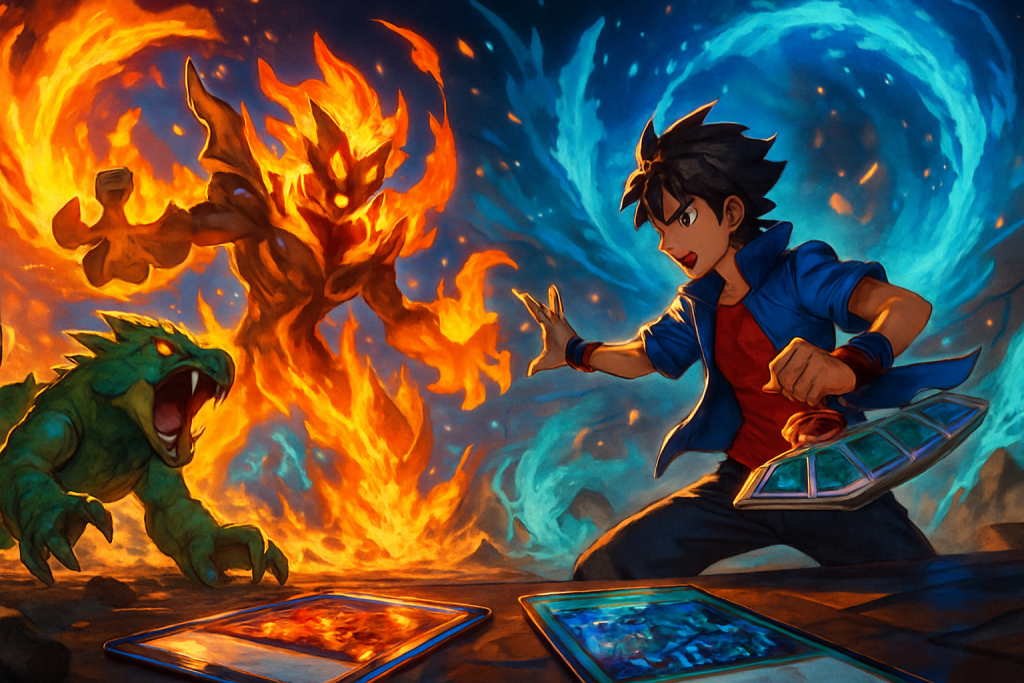
Before ranking anything, the term heist needs a tight definition. For this article, a heist is a deliberate attempt to steal a Pokémon or seize control of one from its lawful trainer, guardian, or setting. That includes completed thefts and clearly staged attempts. It does not include every villain battle, every abduction without a clear theft objective, or every case where a group merely causes chaos.
This method is best for three readers: lore-focused fans comparing villains across generations, writers who need defensible canon examples, and viewers replaying or rewatching the series with scene-specific recall. It is not the right method if the goal is to rank villains by total damage, ideology, or battle strength. A regional apocalypse plot can be larger than a heist in overall stakes, but still rank lower here if the theft element is weak or indirect.
The four-part evidence test
- Target clarity: Is there a specific Pokémon or collection being stolen?
- Operational evidence: Does canon show planning, seizure, transport, restraint, or an explicit attempt?
- Scale: Is the target one partner Pokémon, a facility’s holdings, or a legendary whose capture changes the region?
- Plot consequence: Does the theft meaningfully move the story?
Decision framework No. 1: when two cases are close, rank the one with the clearer on-screen or in-game theft sequence over the one with larger implied stakes but fuzzier evidence. Decision framework No. 2: if one case is a successful seizure and the other is only an attempt, the successful case gets the edge unless the attempted theft is far larger in target scale and plot consequence.
Next step: When evaluating a disputed scene, score it against those four tests before arguing about “biggest.”
Ranked list: the biggest canonical Pokémon heists by evidence, with practical rules for comparing game and anime cases

The ranking below prefers cases supported by the supplied official canon anchors. Each entry states why it qualifies, what evidence is strongest, who should use the example, and when a different comparison model would be better.
1. Team Galactic’s seizure of Dialga in Pokémon Diamond and Pearl
Canon anchor: Pokémon Diamond and Pearl, Team Galactic plotline. The data pack supports as high-confidence that Team Galactic steals the Legendary Pokémon, Dialga.
This ranks first because it combines the strongest mix of target clarity, operational scale, and plot consequence. The target is not ambiguous: Dialga, a central legendary tied to the region’s cosmology, is the object of Team Galactic’s plan. The act is not just harassment or a random capture attempt against a trainer’s party; it is a major story event in which a villainous organization seizes a legendary to execute a larger agenda.
For readers comparing “single Pokémon theft” versus “world-shaping theft,” this is the cleanest benchmark. It is the clearest example of a heist that is both specific and region-defining. Use this case when the question is whether legendary capture can count as a true heist rather than merely a boss-plot event. The answer here is yes, because the theft target is explicit and the seizure itself is central to the operation.
When not to use this example: if the discussion is about stealth, burglary aesthetics, or criminal realism. Team Galactic’s action is a large-scale villain seizure, not a low-profile caper.
Actionable takeaway: Use Dialga as the top comparison point whenever another case claims similar scale; ask whether that other case shows equally clear target capture and equally large plot impact.
2. Team Plasma’s theft of Reshiram in Pokémon Black and White
Canon anchor: Pokémon Black and White, Team Plasma scheme. The data pack lists as high-confidence that Team Plasma steals the Legendary Pokémon, Reshiram.
This ranks just behind Dialga because the theft target is similarly clear and the legendary status keeps the scale extremely high. Team Plasma’s operation qualifies as a heist under the article’s rules because the story centers on the acquisition of a specific legendary Pokémon as part of an organized plan, not a casual battle encounter.
Why it places second instead of first: the supplied evidence supports the theft clearly, but Dialga edges it in comparative lore centrality within this ranking model because the available framing points more directly to a region-level crisis tied to the seized legendary. That is a narrow gap, not a tier break.
This example is best for readers comparing villain teams by execution toward a named legendary objective. It is less useful if the debate is about repeated theft behavior over time; Team Rocket’s anime record has more repetitions, but not stronger single-case scale.
Actionable takeaway: In close comparisons, Reshiram is the model for a top-tier “major heist” that is massive in stakes but still legible as theft rather than only ideological conflict.
3. Team Aqua’s attempt to steal Kyogre in Pokémon Ruby and Sapphire
Canon anchor: Pokémon Ruby and Sapphire, Team Aqua ambitions. The data pack supports as high-confidence that Team Aqua attempts to steal the Legendary Pokémon, Kyogre.
This case ranks below Dialga and Reshiram for one reason: the data pack frames it as an attempt. Under the article’s second decision framework, completed seizure usually beats attempted theft unless the attempt is dramatically larger or better evidenced. Team Aqua still ranks very high because the target is a legendary and the intended theft has major regional consequences.
This is the best example for readers who want to separate intent from completion. A lot of Pokémon villain discourse treats the two as equal. For evidence-led ranking, they are not equal. Team Aqua gets full credit for scale and clarity, but not full credit for outcome.
When not to use it: do not cite this as a cleaner heist than Dialga or Reshiram if the argument depends on successful control already being established.
Actionable takeaway: If a disputed case never gets beyond the setup stage, compare it to Kyogre rather than to completed legendary seizures.
4. Team Flare’s attempt to steal Xerneas in Pokémon X and Y
Canon anchor: Pokémon X and Y, Team Flare’s plan. The data pack supports as high-confidence that Team Flare attempts to steal Xerneas.
Team Flare belongs in the top tier because the target is explicit and legendary-scale. It lands below Team Aqua here because the supplied evidence is similarly phrased as an attempt, and the article is avoiding invented precision beyond the data pack. On that basis, both sit in the same general class: major legendary-theft operations with significant consequences, but not ranked over the clearer completed-seizure examples.
This entry is useful for readers comparing later-generation villain schemes to earlier ones without collapsing every plot into “end-of-world event.” The heist lens helps isolate the theft itself from the wider destructive plan.
When not to use it: if the comparison is about organization sophistication in detail. The ranking does not score costume design, tech level, or speechifying. It scores evidence of theft.
Actionable takeaway: Put Xerneas in the “high-stakes attempted legendary heist” bucket, not in a separate category unless new comparison criteria are added.
5. Team Skull’s theft from the Aether Foundation in Pokémon Sun and Moon
Canon anchor: Pokémon Sun and Moon, Team Skull’s heist. The data pack supports as high-confidence that Team Skull steals Pokémon from the Aether Foundation.
This is the most important non-legendary case in the ranking because it is the cleanest institutional theft in the supplied evidence. Unlike the legendary cases, which often overlap with world-threatening villain plans, this is easier to read as a straightforward heist: Pokémon are taken from a defined facility with a clear victim and clear criminal act.
Why it ranks below the legendary incidents: scale. Even a clean theft from the Aether Foundation does not automatically outweigh the seizure or attempted seizure of a legendary Pokémon central to a region’s story. But if the debate is about purity of heist form rather than raw scale, Team Skull has one of the strongest arguments in the article.
This section is especially useful for readers who want a case that looks more like conventional theft and less like mythic villain ritual. When not to use it: do not cite it as “bigger” than the top legendary cases unless the ranking criteria are changed to privilege operational realism over stakes.
Actionable takeaway: Use Team Skull as the control case for a direct, facility-based Pokémon theft when comparing against grand legendary plots.
6. Team Rocket’s attempt to steal Ash’s Pikachu in Anime Episode 1
Canon anchor: Pokémon, I Choose You! (Anime Episode 1). The data pack supports as high-confidence that Team Rocket attempted to steal Pikachu from Ash in episode 1 of the Indigo League.
This ranks lower in overall size than the game examples, but it remains essential because it is arguably the most recognizable theft attempt in the anime’s canon. The target is crystal clear, the antagonists are explicit about their objective, and the scene establishes a long-running pattern for Team Rocket. As a single incident, however, it is smaller than multi-step legendary operations or facility thefts.
This is the best case for readers asking whether a one-Pokémon snatch attempt should count as a major canonical heist at all. The answer is yes within anime scope, but its ceiling is lower because of target scale. It is a textbook heist attempt, not a franchise-defining seizure.
When not to use it: if the comparison depends on total threat to a region or long-term control of the target.
Actionable takeaway: Treat Pikachu Episode 1 as the anime baseline: if another anime theft is not clearer or larger than this, it should not outrank it.
Borderline and disputed cases: how to classify them, who should include them, and when to leave them out

Some Pokémon cases feel like heists because they involve villains and capture, but the classification breaks down under close inspection. This section is for readers trying to avoid category mistakes.
Recurring Team Rocket attempts, including Mewtwo and Journeys-era thefts
Canon anchors: anime episode resources; the data pack lists Team Rocket’s attempts to steal various Pokémon, including Mewtwo, as medium-confidence, and notes similar activity in Pokémon Journeys.
These cases matter for pattern recognition but are weaker as standalone ranking entries because the evidence in the pack is broader and less scene-specific. They show that Team Rocket’s identity is built around theft attempts, yet the article avoids ranking them above better-documented single incidents. For a list of the biggest heists, repetition is not the same as one clearly evidenced major operation.
Use these examples if the question is “which group is most persistently theft-oriented in canon?” Do not use them to overtake the top-ranked game cases unless the comparison model explicitly rewards frequency over single-event scale.
Legends: Arceus and the problem of institutional capture
Canon anchor: the data pack lists, with medium confidence, that the Galaxy Team steals Pokémon to study them.
This is exactly the type of claim that needs caution. Even if available reports frame it as theft-like acquisition, the institutional and historical context makes it harder to compare fairly with villain-team heists. The article therefore excludes it from the main ranking. The limit is classification: organized capture for study in a frontier context is not automatically equivalent to criminal theft from a trainer or sanctuary.
Use this as a reminder that not every coercive Pokémon acquisition belongs on a heist leaderboard. If the lawful-ownership baseline is muddy, keep the case in a limitations note instead of the core ranking.
Actionable takeaway: For borderline examples, require a clear victim, clear theft intent, and a scene that reads as seizure rather than routine capture or institutional policy.
Practical comparison scenarios: what to do in common fandom debates, for which reader, and when a different metric is better
This section turns the ranking method into reusable decisions.
Scenario 1: “Legendary capture always beats ordinary Pokémon theft”
Not always. If the legendary case is vaguely framed while the non-legendary case shows a direct, completed theft from a facility or trainer, the ordinary-Pokémon case can be cleaner evidence of a heist. Under the supplied pack, Team Skull’s theft from the Aether Foundation is the best counterexample. It is smaller in stakes than Dialga or Reshiram, but more conventionally a heist than some mythology-heavy villain operations.
Use this rule: choose legendary cases when ranking by scale and plot consequence; choose facility or trainer thefts when ranking by purity of heist structure.
Scenario 2: “Should repeated Team Rocket attempts outrank one giant game incident?”
No, not in this article’s model. Team Rocket’s repeated anime theft attempts build a strong franchise identity, but frequency does not automatically defeat a single top-tier legendary seizure. If the question changes to “which organization is most associated with Pokémon theft,” Team Rocket can jump dramatically. If the question stays “biggest canonical heists,” single-event evidence and scale stay primary.
Use this rule: pick Team Rocket for persistence, pick Team Galactic or Team Plasma for peak-event magnitude.
Scenario 3: “Does an attempt count if the theft fails?”
Yes, but outcome still matters. Team Aqua and Team Flare belong high on the list because their targets are clear and the operations are major. They do not automatically pass completed legendary seizures unless the evidence for those seizures is weaker or the attempt is vastly larger in consequence.
Use this rule: failed attempt = eligible; failed attempt does not equal successful seizure without a compensating scale advantage.
Next step: In any debate, state the metric first: biggest by scale, cleanest by heist structure, or most iconic by repetition. Most disagreements come from mixing those three.
Limitations of this ranking: what it excludes, who should care, and when to widen the scope
This ranking intentionally excludes several categories from the main list.
- Manga: the data pack notes a medium-confidence Pokémon Adventures case involving Team Rocket stealing rare Pokémon from Professor Oak. It is excluded from the main ranking because the article’s core scope is games plus anime.
- Films: the data pack notes that Detective Pikachu revolves around Pokémon theft, but film continuity is outside the ranked scope.
- Mobile and side-series titles: low-confidence items such as Pokémon GO Team Rocket PokéStop activity and Mystery Dungeon examples are not reliable enough for a top list here.
- Broad disruption without theft: the medium-confidence note about Team Yell disrupting the Champion Cup to “steal attention” is excluded because social attention is not a Pokémon heist under this article’s definition.
Readers should care about these limits if they are building a franchise-wide list. In that case, the next step is not to force these examples into the existing table, but to create a second ranking with a different scope label. For wider Pokémon canon updates beyond this article, the most relevant Deck Insider follow-up is the Franchise News hub.
Actionable takeaway: Do not compare game/anime heists directly with manga or film incidents unless the article title and scoring rules say franchise-wide from the start.
FAQ
What is the biggest canonical Pokémon heist in this ranking?
Based on the supplied high-confidence evidence and the article’s scoring rules, Team Galactic’s seizure of Dialga in Pokémon Diamond and Pearl ranks first.
Why isn’t Team Rocket higher when theft is their whole identity?
Because this ranking measures the size of specific heist incidents, not brand identity or frequency. Team Rocket dominates theft repetition in anime, but the single Episode 1 Pikachu attempt is smaller than legendary-scale game plots.
Do failed theft attempts count?
Yes. Team Aqua’s Kyogre operation and Team Flare’s Xerneas operation both count. They rank below clearer successful-seizure cases when the evidence is otherwise close.
Why are manga and movies mostly absent?
The article scope is intentionally limited to core games and anime so the cases remain comparable. The data pack includes manga and film notes, but the title topic asks for explicit scope limits, so they stay outside the main ranking.
Is this a lore ranking or a realism ranking?
It is primarily an evidence-led canon ranking. It rewards clear theft target, operational proof, scale, and plot impact. It does not reward realism, stealth quality, or criminal sophistication unless those elements are directly visible in canon evidence.
Conclusion: the cleanest way to rank Pokémon heists, and who should use this model next
If the ranking is kept strict, the biggest canonical Pokémon heists are led by the legendary-focused game incidents: Team Galactic with Dialga, Team Plasma with Reshiram, then major attempted legendary thefts by Team Aqua and Team Flare. Team Skull’s Aether Foundation theft remains the best non-legendary pure-heist example in the supplied evidence, while Team Rocket’s Episode 1 Pikachu attempt is the foundational anime baseline.
The practical lesson is simple: separate scale from structure. Legendary seizure usually wins on size; direct trainer or facility theft often wins on heist purity. Readers using this model for debates, scripts, or lore explainers should state the metric first, then compare only within the declared scope. That one step removes most of the usual confusion.
Links in this article
Illustration image sources
Custom illustration image was created using the OpenAI Images API.