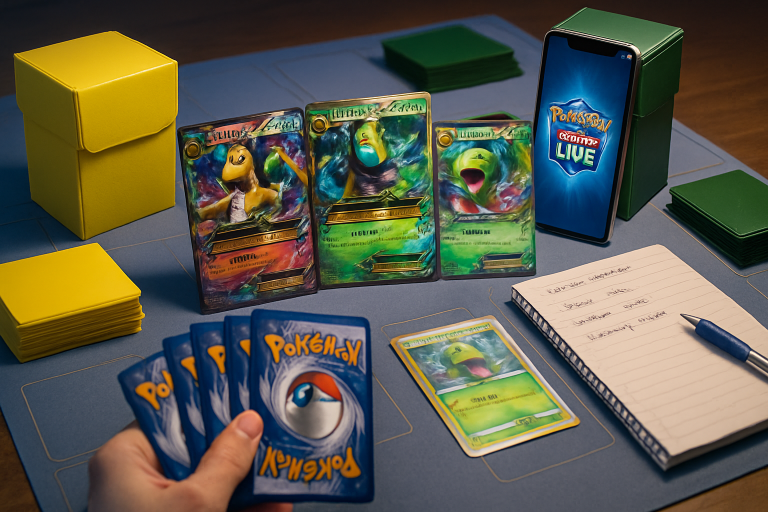
Pokemon Budget Ladder 2026: From Starter List to Local-Ready Build in Three Upgrade Steps
Pokémon TCG budget deckbuilding in 2026 is less about finding a single “cheap meta deck” and more about buying cards in the right order. Many new players overspend on splashy attackers, then lose games because their list still bricks, misses key search cards, or folds to common local metagame pressure. A better approach is a ladder: begin with a functional starter-level shell, add consistency first, then upgrade the disruption and matchup slots that turn a kitchen-table deck into a local tournament list.
This roadmap focuses on the real Standard Pokémon TCG ecosystem: League play, League Challenges, League Cups, and local store events. The goal is not to build the absolute strongest Regional Championship deck at any cost. The goal is to reach a list that can reliably play best-of-one Swiss rounds at locals, punish weaker openings, and give a newer player clean reps with a deck that still has room to grow.
To keep the article practical, the examples center on the easiest budget path in Standard: a straightforward single-main-attacker or low-complexity ex shell built from widely available products and singles. As of early 2026, that usually means watching three things before buying upgrades: the current Standard rotation window, any recent ban or errata announcements, and whether the newest set changed the speed of setup decks at local level. The exact best deck will shift with each release, but the upgrade logic stays stable: engine first, counts second, techs last. If that sequence is followed, most purchases remain useful even when the metagame moves.
Choose the right starting point: a real Standard shell, not a pile of favorites
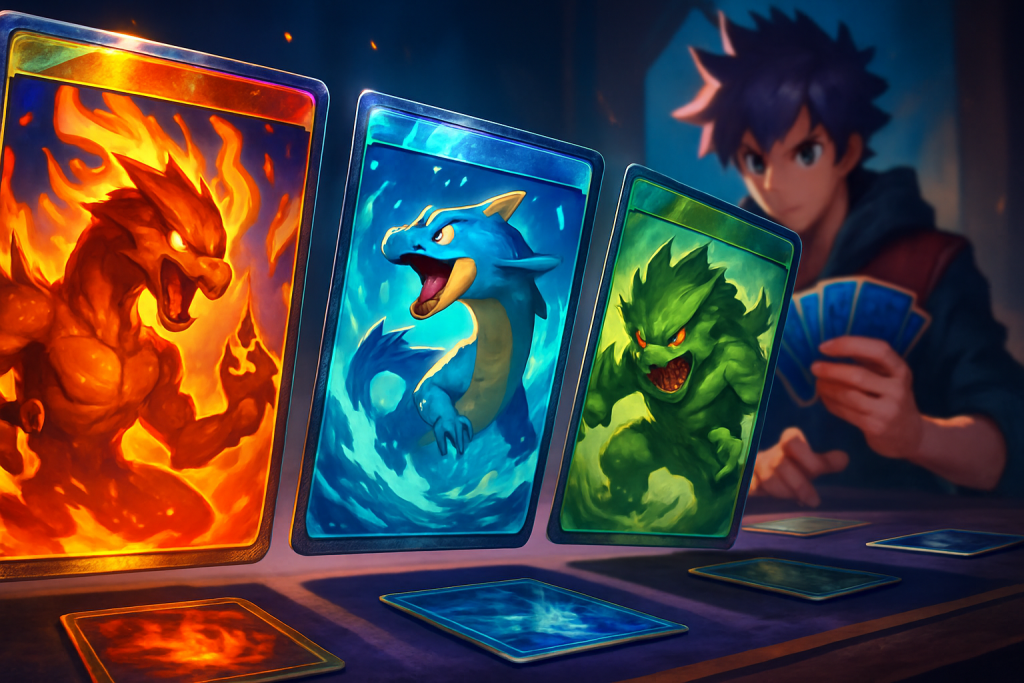
What to do: Start from a real Standard-legal archetype with proven card roles, then trim power cards to fit a budget instead of inventing a list from scratch. The best starter shells for budget improvement are decks with a clear primary attacker, 10-16 core Pokémon, and a trainer engine that overlaps with many other Standard decks.
For whom: This is best for new or returning players entering League play, juniors moving into more competitive local events, and casual players who want to upgrade one deck over several months instead of constantly rebuilding.
When not to use it: Do not follow this path if the goal is immediate Regional-level optimization, or if the chosen deck relies on a high density of expensive ace cards, multiple rule-box lines, or narrow format-specific techs that lose value after one metagame swing.
A good budget starter in Pokémon usually has four traits:
- It can attack every turn with simple sequencing.
- Its draw and search core uses staple Supporters and Items that transfer into future decks.
- It does not require several hard-to-find one-of Pokémon to function.
- It can win local rounds through consistency, not just raw ceiling.
In practice, that usually means avoiding overly customized combo lists at the beginning. A budget player is better served by a clean shell with repeatable setup than by an unstable high-roll deck. If the opening hand often needs two different pieces plus a perfect Supporter, it is a poor starting point for a three-step upgrade ladder.
If you are brand new to the game itself, start with this beginner-friendly guide to Pokémon TCG first, then come back to budget upgrades once Standard deck roles make more sense.
The baseline budget shell to aim for
A realistic starter-level build should already include:
- 4 copies of the main Basic Pokémon or the maximum practical count of the core attacker line
- A stable 8-12 card draw/search engine
- At least 10-12 outs to early setup between Items, Supporters, and ball/search effects
- A simple energy package that does not force awkward attachments
- 1-2 recovery cards so the deck can survive prize trades
The mistake to avoid is buying premium finishers before buying consistency. In Pokémon TCG, the strongest budget increase per euro or dollar often comes from the cards that make turn one and turn two function more often, not from the card that produces the biggest knockout ceiling on paper.
Concrete starter-to-upgrade example
To make the ladder less abstract, imagine a low-complexity Basic ex shell that starts around the cost of a casual League deck and upgrades over time.
| Stage | What the list looks like | Typical spend | Main gain |
|---|---|---|---|
| Starter shell | Main attacker at 3-4 copies, mixed draw cards, extra Energy, 1 gust effect | Lowest entry cost | Playable at League, but inconsistent |
| Step 1 | Maxed core attacker count, stronger search package, better draw Supporters, -1 to -2 Energy | Usually the best value spend | More turn-two attacks and fewer dead hands |
| Step 2 | +1 gust, +1 disruption slot, +1 stadium or recovery card | Moderate | Better closing power at locals |
| Step 3 | Final count tuning for expected room | Low to moderate | Cleaner prize mapping across Swiss rounds |
You do not need the exact same 60 as a top Regional list to benefit from this framework. You need a shell where each purchase clearly improves setup, tempo, or closing power.
Upgrade Step 1: Fix consistency before adding power cards

What to do: Use the first upgrade step to replace weak draw, narrow search, and low-impact filler with broadly useful Standard staples. This is the stage where the deck starts playing like a real tournament list.
For whom: This step matters most for players who lose because they miss evolutions, cannot find energy, or spend the first two turns passing instead of developing the board.
When not to use it: Skip or reduce this step only if the starter product already contains a strong engine and the list is losing specifically to matchup issues rather than self-inflicted inconsistency.
The first wave of upgrades should target four areas:
1. Raise the number of universal search cards
If the deck opens too many dead hands, add more universal Pokémon search and early-turn setup pieces before considering any attacker changes. In Standard, this often means increasing the counts of the best legal ball/search effects and making sure key Basics are accessible on turn one. If a main attacker is a four-of in theory but effectively a two-of in play because the search count is too low, the list is underbuilt.
Practical result: More turn-one bench development, fewer mulligan-quality starts, and a much higher chance of attacking on curve.
2. Replace weak draw Supporters with efficient, format-proven options
Starter-level lists often include draw cards that are acceptable at casual tables but too low-impact for local tournaments. The first budget wave should convert those slots into the best legal shuffle-draw or hand-refresh Supporters and, where appropriate, additional draw engines on Pokémon or Items. Even two to four card swaps here can change the whole deck’s texture.
Practical result: Better recovery after a poor opening hand and fewer turns spent using a Supporter just to do almost nothing.
3. Trim “cute” one-ofs that do not win specific matchups
New players frequently add single cards because they seem flexible. At locals, those cards usually underperform unless they solve a real board state that appears often. In Step 1, remove the low-frequency tricks and increase the counts of cards the deck always wants to see.
Rule of thumb: If a one-of does not improve setup, prize mapping, or a common matchup, it should usually become a higher-count staple.
4. Clean up the Energy count
Budget lists often overcompensate by playing too much Energy. That creates clunky hands and reduces access to trainers. If the deck has a stable search and draw engine, cutting even 1-2 Energy can unlock better consistency cards without noticeably hurting attack access.
Practical result: Fewer unplayable openings and stronger topdecks in the middle turns.
Quick upgrade table: Step 1 swaps that usually matter
| Cut first | Add first | Why it improves win rate |
|---|---|---|
| Extra Energy beyond what the deck actually uses | More universal search | Raises odds of opening the correct Basic or setup piece |
| Low-impact casual draw Supporters | Best legal hand refresh Supporters | Fixes weak mid-game hands |
| Narrow one-of trick cards | 4th attacker copy or extra consistency slot | Makes the deck do its main job more often |
| Expensive finisher that is hard to set up | Reliable setup card | Improves real games more than ceiling-only damage |
Example scenario: why Step 1 wins more locals than a flashy attacker swap
Consider a simple ex-based deck that currently loses round-one games because it opens with the wrong Basic, misses the second attachment, and never finds a gust effect in time. Replacing one attacker and one tech Pokémon with higher counts of search cards and a better draw Supporter often adds more real win percentage than buying a more expensive finisher. Against average local opponents, consistent pressure and cleaner sequencing punish mistakes immediately.
This is also the phase where decklist discipline matters. If the list is still changing every week, it is hard to learn correct sequencing. A stable Step 1 list creates the reps needed for later upgrades to matter. If you are also preparing for your first bigger weekend, pair this article with this 10-day Pokémon Regional prep plan so your testing routine has structure.
Upgrade Step 2: Add the disruption and tempo cards that matter at locals
What to do: After consistency is fixed, use the second upgrade step to add cards that swing real local games: gust effects, hand disruption, stadium control, recovery, and one or two targeted answers to common decks in the store metagame.
For whom: This stage is for players who can already set up reliably but now lose close games because they cannot finish prizes, cannot break a setup engine on the opponent’s bench, or cannot answer a specific board pattern.
When not to use it: Do not overload this stage if the deck still fails its own setup too often. A deck that bricks with better disruption is still a weak local choice.
Many store-level events are decided less by peak power and more by tempo swings. A budget deck that establishes its board and then uses the correct disruption card at the right time can beat more expensive lists piloted loosely.
Prioritize these upgrades in order
- Reliable gust effects: If the deck cannot choose targets, it will struggle to finish games. Add or increase the best legal gust cards so damaged support Pokémon and fragile draw engines can be picked off when needed.
- Hand disruption that fits the deck’s pacing: Aggressive decks want disruption that punishes slow setup turns; more controlling midrange decks may prefer effects that reset larger hands later.
- Stadium counts that actually matter: If local players lean on a popular stadium-dependent engine, adding the right stadiums or stadium bump options can create free percentage points.
- Recovery cards: At locals, long rounds often come down to whether a prized attacker, lost energy, or discarded gust option can be recovered at the right moment.
How to identify the right local techs without wasting money
Use a simple three-question filter before buying any matchup card:
- Does this solve a deck seen often at the local store?
- Does it stay useful in at least one additional matchup?
- Can the deck search it at the right time, or will it sit dead in hand?
If the answer to two of those three questions is no, it is probably not a Step 2 purchase.
This is especially important in Pokémon TCG because many narrow counters look attractive online but are poor real-world buys for a weekly League Cup environment. If a card only matters against a single rare deck, that budget is usually better spent on staple disruption that applies across multiple rounds.
Practical scenario: preparing for a Charizard-heavy local scene
If a local metagame has many slower, setup-oriented Stage 2 decks, the Step 2 budget should shift toward gust, pressure, and disruption rather than mirror-tech cards. The game plan is to attack their setup turns, strand support Pokémon, and convert small board stumbles into a prize lead. In that environment, adding one more consistency card may matter less than adding the extra gust effect that closes round three.
By contrast, if the local room is full of fast basic-heavy decks, overinvesting in slow Stage 2 counters can backfire. The better Step 2 plan may be more efficient draw, a sturdier opener count, and healing or recovery that improves prize trading.
For matchup-by-matchup thinking, use this simple Pokémon matchup planning system. Even though Standard has no sideboard, the planning process is useful for deciding which two flex slots actually deserve your budget.
Upgrade Step 3: Turn the list into a local tournament build
What to do: The final step is not just adding stronger cards. It is tuning exact counts for six-round reality: opening hands, prize mapping, time, best-of-one pressure, and expected local pairings.
For whom: This step is for players ready to enter League Challenges and Cups with the expectation of posting a respectable finish rather than just learning the deck.
When not to use it: Do not finalize a local-ready list if there has been no testing after the first two upgrade phases. Count tuning without reps is mostly guesswork.
At this stage, the deck should already function. Now the question becomes: what 60 cards give the highest probability of doing the right thing across four to six Swiss rounds?
Focus on counts, not card names
The most common Step 3 mistake is chasing the latest one-of tech instead of fixing counts that are still wrong. Local-ready tuning usually means decisions like:
- Going from 3 to 4 copies of the best starter
- Cutting the fourth situational Supporter for a third universal search card
- Changing a 2-2 support line to a 2-1 line plus recovery because bench space matters more than redundancy
- Adding the second stadium because losing the stadium war costs actual rounds
These changes look small, but they are the difference between a deck that feels “fine” and a deck that routinely converts playable hands into wins.
Build for local tournament structure, not online ideal conditions
Many lists that feel powerful in testing are less suitable for local events because they are too sequencing-intensive for best-of-one Swiss, too vulnerable to awkward prizes, or too dependent on perfect information. A local-ready build should emphasize:
- Clear opening priorities
- Low failure rate in the first two turns
- Simple prize routes against unknown decks
- Enough outs to recover after a judge call, shuffle, or time-pressure mistake
That often means slightly reducing ceiling for reliability. At locals, avoiding one self-inflicted loss can matter more than maximizing the deck’s best possible draw.
Finalize a sideboard mindset without a sideboard
Pokémon Standard does not use a sideboard in normal local Constructed play, so the main deck has to cover the room. The right Step 3 question is not “what beats one matchup hardest?” but “what cards are live in the highest number of pairings?”
A well-built local list typically has:
- Core consistency at full or near-full count
- At least one flexible gust line
- One recovery package that can reclaim attackers or energy
- One stadium plan
- One or two flex slots for the expected room
If the list has four or five narrow tech slots, it is likely overtuned and will lose to its own draws.
Testing routine: how to know each upgrade step is actually working
What to do: Track specific failure points after every play session: dead opening hands, missed turn-two attack, inability to gust for game, weak topdecks, and cards stranded in hand. Upgrade decisions should follow those notes, not just online hype.
For whom: Essential for any player on a budget, because every purchase should address a repeatable problem.
When not to use it: Never skip testing logs if the card budget is tight. Guessing is expensive.
A simple 10-game checklist is enough:
- How often did the deck attack on schedule?
- How often did the opening hand need a lucky topdeck?
- Which cards stayed dead in hand for multiple turns?
- How many games were lost because a gust card was unavailable?
- How many were lost because setup failed before the matchup mattered?
If most losses happen before the deck starts functioning, return to Step 1. If the deck sets up but cannot close games, focus on Step 2. If everything feels close but inconsistent across rounds, Step 3 count tuning is the answer.
Practical testing benchmark for local readiness
A budget deck is generally ready for local competition when it can do three things consistently: establish a board in the first two turns, execute a clear prize map in ordinary games, and recover from one disrupted turn without collapsing. If any one of those fails too often, the list is still in upgrade mode rather than event mode.
Common budget traps in Pokémon TCG 2026
What to do: Avoid purchases that look efficient short-term but do not transfer into future Standard decks or do not solve actual gameplay problems.
For whom: Especially useful for newer players building their first serious collection.
When not to use it: The only time to ignore these rules is when a player knowingly buys for collecting, rarity, or personal preference rather than tournament value.
Trap 1: Buying alternate-art or premium rarity staples first
Competitive value comes from card access, not finish. On a budget ladder, regular versions of staple trainers and utility Pokémon should always come before premium printings.
Trap 2: Chasing the “secret meta call” before owning staples
A niche counter deck may spike one event, but staple trainers remain playable across archetypes. Budget players gain more flexibility by first building a trainer base that transfers into multiple decks.
Trap 3: Over-teching for one local rival
A deck tuned too hard to beat one friend or one store regular usually becomes worse against the rest of the room. Respect local patterns, but build for the field, not a grudge match.
Trap 4: Upgrading attackers while ignoring sequencing burden
Some stronger cards make the deck harder to pilot, not just better. If a player is still learning prize mapping and search order, a slightly lower-ceiling but cleaner line may produce better real tournament results.
Limitations of the three-step budget ladder
This roadmap is strong for local Standard events, but it has limits. First, it does not replace metagame updates after new set releases, rotation announcements, bans, or errata. In practice, budget buyers should re-check legality and local results before each purchase wave, especially after rotation season or a major set release. A card that is a safe staple in one season can become a lower priority after a major shift.
Second, some archetypes simply do not scale well from budget to tournament level because too much of their power is concentrated in expensive core pieces. In those cases, forcing a budget version can create a false economy: several medium purchases still fail to produce a competitive list.
Third, local tournament readiness is not the same as Regional Championship readiness. A local-ready budget deck can absolutely win store events, but larger events usually punish small consistency flaws and narrow matchup gaps more severely across many rounds.
Finally, player skill matters. A well-upgraded list still requires clean sequencing, mulligan discipline, legal board management, and awareness of prize routes. The three-step ladder improves the deck’s baseline, but it does not replace practice.
FAQ
What is the best budget deck to start with in Pokémon TCG Standard in 2026?
The best choice is usually a straightforward Standard-legal deck with a simple attacker plan and transferable trainer staples, not necessarily the cheapest 60 cards possible. If two decks cost a similar amount, the better starter is the one whose trainers and engine cards remain useful in future builds.
Should the first upgrades be Pokémon or Trainer cards?
Usually Trainer cards. Search, draw, gust, recovery, and stadium control improve more games than a single upgraded attacker. Most budget lists gain more match win percentage from a stronger engine than from one premium threat.
How many matchup techs should a local-ready list play?
Usually one or two true flex slots, occasionally three if the local metagame is extremely concentrated. More than that often hurts consistency unless the entire deck is built around targeted counterplay.
Is it better to copy a top Regional list or adapt a simpler local list?
For most budget players, adapting a simpler list is better. Regional lists are often tuned for high-level expected fields and pilot skill. A local-ready deck should match the player’s reps, card access, and store metagame.
When should a player stop upgrading and switch decks?
Switch when the next purchases are highly specific, expensive, and do not improve staple ownership, or when testing shows the archetype cannot handle the local field even after consistency and disruption upgrades. If every fix is narrow and temporary, the better investment may be a new shell that uses the same trainer base.
Conclusion
The most effective Pokémon TCG budget plan in 2026 is not to jump straight from a starter list to a full meta deck overnight. It is to upgrade in the order that produces actual wins: consistency first, disruption second, precise count tuning third. That sequence turns a functional beginner shell into a list that can compete at League nights, Challenges, and many Cups without wasting money on cards that do not solve real problems.
For most players, the key insight is simple: local tournaments reward decks that do their job every round. A stable setup engine, practical gust and recovery options, and tested counts will usually outperform a flashy but unstable pile of powerful cards. If each upgrade is tied to a repeated in-game failure point, the collection grows efficiently and the deck gets better in visible, measurable steps.
Links in this article
- Welcome to Pokémon TCG: A Friendly Guide to the World Behind the Cards
- Pokémon Regional Tournament Prep: 10-Day Plan for Your First Competitive Weekend
- Pokémon Sideboard Planning for New Players: A Simple Matchup-by-Matchup System
Illustration image sources
Custom illustration image was created using the OpenAI Images API.