Lorcana Combat-Phase Decisions Under Pressure: A Practical Strategy Guide
Competitive Disney Lorcana rewards clean combat-phase decisions more than flashy lines. In close games, the biggest swing often comes from one turn where a player chooses whether to challenge, quest, sing, develop the board, or simply pass with a better threat profile for the next turn. Under tournament pressure, those decisions get harder because hidden information, time limits, and imperfect recall distort risk assessment.
The goal of this guide is simple: turn combat from a vague “board feel” skill into a repeatable decision process for real Lorcana matches. The focus is not on theory in the abstract. It is on what to do in actual games, when to do it, and when not to. If broader format context is useful before drilling into combat, the Disney Lorcana hub is the best starting point, and matchup-specific deck trends are easiest to follow through Deck Insider’s Lorcana strategy coverage.
Start combat with a role check, not with the board state alone
What to do: Before declaring any challenge or quest, identify which player is the beatdown for the next two turns. In Lorcana, that role can change midgame because of lore velocity, evasive pressure, item engines, and swing turns enabled by songs. Ask three questions in order:
- Who wins if both players stop challenging and just race lore?
- Who has the better recovery if the board gets partially cleared?
- Who benefits more from forcing exertions this turn?
For whom: This matters most for competitive players piloting midrange, tempo, and board-centric control lists, where every exert decision changes future attack windows. Aggro players also benefit, but their role is usually clearer.
When not to use it: Do not overcomplicate obvious lethal setups or emergency stabilization turns. If the opponent threatens a guaranteed lore break-point next turn and only one challenge line stops it, the role check is already answered.
A common mistake is treating every available favorable challenge as mandatory value. In Lorcana, a clean trade is only good if it supports the role that matters now. If an Amber/Amethyst lore-focused deck is already ahead on lore and holds the better top-end card flow, spending multiple characters to tidy up a board can be worse than taking lore and forcing the opponent to answer. On the other side, a Ruby/Sapphire player facing a board of efficient questers usually cannot afford passive value; the role is defensive until the swing turn is secured.
The practical rule: challenge when it changes the race, quest when it preserves the race, and develop when both challenge and quest leave the race unchanged. That single filter removes many low-impact attacks.
Use a four-step combat checklist to avoid panic decisions
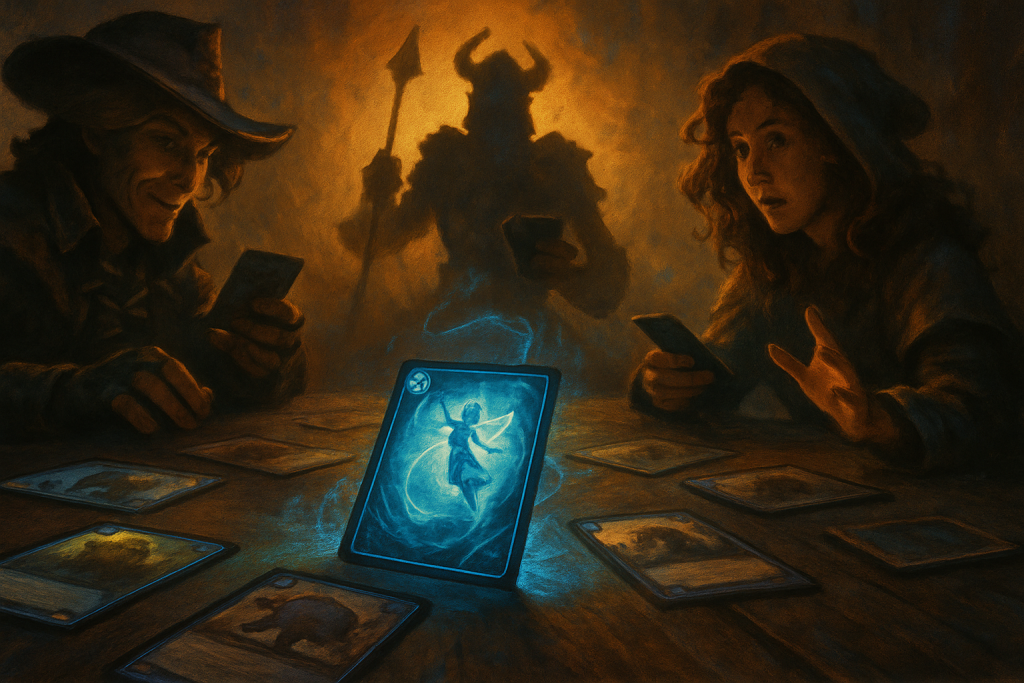
What to do: Run the same four-step checklist every turn before committing characters.
1. Count immediate lore on both sides
Separate current board lore from potential next-turn lore. Exerted characters are not equal to ready characters, and characters with useful challenge stats are not equal to pure questers. Write the turn in plain language: “If nothing changes, opponent represents X lore next turn; if I challenge these two characters, that drops to Y.”
Practical impact: This prevents the classic mistake of clearing a utility character while ignoring the actual lore clock.
2. Mark the must-answer threats
Not every opposing character deserves a challenge. Sort targets into three buckets:
- Immediate lore threat: high-lore questers, evasive closers, characters likely to sing key songs next turn.
- Engine threat: card-advantage bodies, cost-reduction bodies, recursion enablers, item synergy pieces.
- Stat wall: characters that block profitable attacks and protect the rest of the board.
Challenge in that order unless the matchup specifically reverses priorities.
When not to use it: Against decks with weak reload and low removal density, engine threats can be less urgent than preserving lore tempo. Against slow Sapphire ramp openings, for example, the immediate question is often whether enough lore can be pushed before the larger control turn arrives.
3. Price in the opponent’s likely punishments
Before exerting a key character, ask what happens if the opponent untaps and uses removal, a song, a challenge plus action, or a tempo bounce line. The exact card pool changes over time, but the principle does not: every exertion is a statement about what punish window is acceptable.
Practical impact: This step matters most when the board is near parity. A challenge that looks efficient can become a losing line if it exposes a singer, a warded threat support piece, or the only body that can trade up next turn.
4. Build the turn backward from your losing scenario
Do not start with your best-case line. Start with the line that still leaves outs if the opponent has a strong response. Competitive Lorcana rewards preserving flexibility because many decks convert one opening into a major tempo swing.
A simple tournament shortcut is: take mandatory defenses first, then profitable attacks, then optional lore. That sequencing catches many avoidable blunders.
Know when a challenge is really a resource-denial play
What to do: Stop evaluating combat only in terms of board count. Many strong challenges are really attacks on a future resource: ink efficiency, singer access, support coverage, item scaling, or the ability to double-spell next turn.
For whom: This is especially important for players facing Ruby/Sapphire, Sapphire/Steel, or any build whose strongest turns depend on surviving to a higher-resource breakpoint with support pieces intact.
When not to use it: Do not chase small resource denial if you are already losing the lore race badly. Removing a setup piece is less important than stopping actual lethal pressure.
Examples of resource-denial combat decisions in Lorcana:
- Challenging a singer not because of its lore value, but because it unlocks an opponent’s expensive song turn.
- Trading into a support or utility body so future attacks become awkward and inefficient.
- Removing a small item-synergy character that turns otherwise harmless artifacts into scaling pressure.
- Forcing the opponent to spend ink replaying a role-player instead of developing to the next key turn.
The tournament takeaway is blunt: if a character changes how much of the opponent’s hand is live next turn, it is often more important than its printed strength or willpower suggests.
Prioritize challenges by race impact, not by clean math
What to do: Rank every possible challenge by how much it changes the next two turns of lore production. This is more useful than asking whether the attack is “efficient.” A mathematically clean trade can be strategically poor, while an ugly partial-damage line can be correct if it opens a better race pattern.
For whom: Players who routinely lose to decks they felt were “topdecking” often have a combat-priority problem rather than a variance problem.
When not to use it: In hard control mirrors or low-board games, card economy and hand quality can matter more than raw lore race for a turn cycle.
Use this order as a default:
- Characters that create or threaten a two-turn lethal clock.
- Characters that turn on songs or premium interaction.
- Characters that multiply future attacks through support, bodyguard coverage, or stat breakpoints.
- Pure value bodies with low race impact.
Suppose the opponent has one high-lore quester, one medium-stat utility character, and one bodyguard. Many players auto-clear the bodyguard because it is the “proper” combat step. But if the real issue is that the high-lore quester puts the game out of range next turn, the correct line may be to set up a double challenge, use removal elsewhere, or even ignore the bodyguard and race if the numbers support it. The board should be read as a system, not as isolated stat lines.
Sequence challenges to preserve information and flexibility
What to do: In pressure spots, the order of attacks matters almost as much as the attacks themselves. Start with lines that preserve alternative branches. Challenge first with characters whose role will not change based on the result, and hold characters whose quest-or-challenge decision depends on remaining board states.
For whom: This is critical for midrange mirrors, Steel-based interaction decks, and any list that can convert one surviving body into a stronger song or action turn.
When not to use it: If a specific challenge is vulnerable to combat tricks or pre-combat effects that disappear later in the sequence, it may need to happen first despite lower flexibility.
Useful sequencing rules:
- Lead with forced trades. If one character can only profitably challenge one target, do that first.
- Delay your premium flexible body. A high-strength or high-willpower character may become your best quester after earlier trades.
- Use damaged characters before clean ones when the role is purely defensive. Preserve healthy characters for future race pressure.
- Keep singers unexerted until the line is clear. A character that might sing post-combat is not a normal attacker.
This matters because tournament errors often come from acting on the first acceptable line. Strong players keep multiple endings alive until the board forces commitment.
Decide whether to quest before combat by asking one specific question
What to do: When unsure whether to quest first or challenge first, ask: “If this character quests now and dies on the swing-back, did that lore matter more than the board control I gave up?”
For whom: This is most useful for aggressive and tempo players, especially when a board lead creates the illusion that every ready body should convert to lore immediately.
When not to use it: If the opponent has no profitable return challenges or is already dead to board plus lore math, the question is unnecessary.
Quest-first is usually correct when:
- The lore changes the opponent’s required answer immediately.
- The character was unlikely to challenge profitably anyway.
- The opponent’s return turn is constrained on ink or board.
- The matchup rewards forcing them into reactive lines over value lines.
Challenge-first is usually correct when:
- The opponent has a premium singer or engine body that must not untap.
- The board race is close and preserving future questers matters more than current lore.
- Exerting first opens too many punish windows.
- Your deck wins longer games if the board remains manageable.
In other words, do not make questing a default habit. Make it a calculated exchange of future board equity for immediate race pressure.
Pressure changes matchup to matchup, so combat rules must also change
What to do: Use matchup-based combat priorities rather than one universal style.
For whom: Anyone preparing for tournaments, set championships, DLC-level events, or competitive local metas.
When not to use it: If the opponent’s list is clearly off-meta or missing expected tools, adjust quickly rather than forcing stock assumptions.
Against aggressive Amber-based lore decks
Challenge their best lore-rate characters early if that challenge also preserves your own future questers. Do not spend too much time cleaning low-impact utility bodies while the opponent keeps converting ready characters into lore. The main goal is reducing total lore throughput, not necessarily winning the board by margin.
Against Ruby control shells
Avoid overexerting into swing turns that punish wide boards or exposed key threats. Combat should often focus on preserving a staggered threat pattern rather than maximizing same-turn damage. Challenge support bodies that enable clean control turns, but only if doing so does not walk your best threat into an obvious answer.
Against Sapphire ramp or item-based value decks
Prioritize characters that convert ink or item scaling into tempo. If the window exists, challenge setup bodies aggressively before the large-resource turns start dominating combat. Once the opponent reaches stronger endgame thresholds, random value trades usually stop mattering unless they directly cut off lore.
Against Steel-based board interaction
Respect damage-based removal and song turns. Do not line up multiple characters into the same punish pattern if one challenge can achieve enough stabilization. It is often better to maintain two meaningful threats than to take one extra favorable trade and expose the entire board to a stronger clear line.
The practical takeaway: combat is matchup preparation expressed on the table. If sideboarding does not exist in the format, in-game role adaptation becomes even more important.
Three practical pressure scenarios and the best default line
What to do: Use these scenarios as templates. They are not rigid scripts, but they reflect common high-pressure Lorcana decisions.
For whom: Tournament players who want a quick mental model during timed rounds.
When not to use it: Ignore the default if known hand information or a revealed decklist changes the likely punishments.
Scenario 1: Ahead on board, behind on lore
You have more characters, but the opponent is within two turns of winning if unchallenged. The instinct is often to keep developing because the board looks favorable. The better default is to convert board lead into immediate lore denial. Challenge the characters that represent the cleanest two-turn clock first, even if that means skipping some lore this turn. A board lead that does not reduce incoming lore is often fake security.
Scenario 2: Behind on board, ahead on lore
The common error is panic-clearing everything possible. The better default is selective defense. Challenge only the characters that either enable a comeback swing or threaten to flip the race. Then keep enough board presence to continue questing. If already ahead on lore, every challenge should justify the lost lore output. Otherwise, the stabilizing player may accidentally become the losing racer.
Scenario 3: Board parity, both players one explosive turn from taking over
This is where sequencing discipline matters most. Start with forced trades, preserve your best singer or flexible body, and build the turn around the opponent’s most punishing next-turn line. If one opposing character unlocks a premium song or a broad tempo swing, challenge it first even if another trade looks cleaner on paper. In parity spots, one denied enabler is often worth more than one extra stat-efficient exchange.
How to make better combat decisions under tournament time pressure
What to do: Simplify in a disciplined way. Strong tournament combat is not about calculating every branch to perfection. It is about using reliable shortcuts that protect against catastrophic mistakes.
For whom: Especially useful for players going deep into long events, where fatigue increases autopilot errors.
When not to use it: In obvious lethal races, do not waste time on a full framework. Confirm the count and execute.
Use these pressure tools:
- The 10-second rule: Before the first exertion, spend ten seconds counting only lore clocks and must-answer threats.
- The red-light rule: If a line exerts your only answer to the opponent’s best threat next turn, stop and re-check.
- The one-purpose rule: Every challenge should have one primary reason: deny lore, kill an engine, preserve a key body, or force inefficient recovery. If the reason is unclear, the attack is probably weak.
- The no-cleanup rule: Do not spend the end of the turn on a low-value extra challenge just because it is available. Optional cleanup attacks lose more games than they win when they expose a critical body.
These shortcuts are not flashy, but they reduce mis-sequencing and overtrading, two of the most common errors in Lorcana combat.
Limitations of any combat framework in Lorcana
What to do: Treat every framework as a decision aid, not as a substitute for card knowledge and matchup reps.
For whom: Everyone, especially players trying to turn general strategy advice into fixed rules.
When not to use it: If exact revealed information changes the incentives, follow the information instead of the heuristic.
There are real limits:
- Hidden information matters. A correct defensive line against one likely hand can be wrong against another.
- Set releases change threat density. New songs, removal, and scaling engines alter what counts as a must-answer body.
- Local metas distort standard priorities. If a local field underplays certain punishments, greedier combat may become correct.
- Deck construction changes combat value. A list with stronger reload can trade resources more freely than a list that needs every body to stick.
The main limitation is that combat cannot be separated from deck identity. A challenge that is correct in one Ruby/Amethyst list may be wrong in another if the top-end, removal mix, or lore plan differs meaningfully.
FAQ
Should every favorable challenge be taken in Lorcana?
No. Favorable stats do not automatically mean favorable strategy. A challenge is only good if it improves the race, denies a critical resource, or protects a stronger next turn.
When is it correct to ignore an opposing character and keep questing?
When that character does not meaningfully change the next two turns of lore, does not unlock a major song or engine line, and your lore pressure forces the opponent into defense. Ignore low-impact bodies more often than instinct suggests.
How much should known matchup data affect combat?
A lot. Combat priorities should change based on what the opposing deck is trying to unlock. Against ramp, deny setup windows. Against aggro, cut lore output. Against control, avoid exposing too much to one answer.
What is the most common combat mistake in competitive Lorcana?
Overtrading. Players often spend too many characters clearing a board that was not actually winning the game, then lose because they gave up their own lore clock and flexibility.
How can combat decisions be improved fastest?
Review turns by role and race impact, not just by whether a trade looked efficient. After each match, check which challenge actually mattered to the lore clock and which ones were cosmetic.
Conclusion
Better Lorcana combat under pressure comes from narrowing each turn to the questions that matter: who is racing, which opposing character truly changes the next two turns, what punishments are being accepted by exerting, and whether each challenge serves a real strategic purpose. Players who improve those four areas usually stop losing to “one bad turn” because that turn becomes easier to map correctly.
The strongest habit is also the simplest: do not attack because a trade is available; attack because the trade changes the game. In competitive Disney Lorcana, that distinction is where tight combat phases become match wins.
Links in this article
Illustration image sources
Custom illustration image was created using the OpenAI Images API.