One Piece Beginner Card Spotlight: 10 Cards That Swing Games
In the One Piece Card Game, beginners usually lose games for two reasons: spending DON!! inefficiently and firing powerful effects at the wrong moment. The fastest way to fix both problems is to study cards that regularly convert small openings into winning positions. These are not random flashy rares. They are the kinds of cards that steal tempo, protect a leader for one more turn, remove the one threat that matters, or create a board state the opponent cannot cleanly answer.
This spotlight stays focused on ten real cards from the current One Piece TCG ecosystem that frequently decide games across casual play, local events, and many competitive lists. The goal is not to rank the ten “best” cards in the entire game. The goal is to explain why these cards swing outcomes, what beginners should actually do with them, who benefits most from learning them early, and when they should stay in hand instead of being forced onto the table.
If the broader rules, timing windows, and turn structure still feel shaky, it helps to first review the fundamentals of attacking, DON!! attachment, and Counter management alongside Deck Insider’s wider One Piece coverage. For players already building toward locals, the biggest edge comes from recognizing which single card changes the turn math the most.
What makes a card a true game-swinger in One Piece TCG?
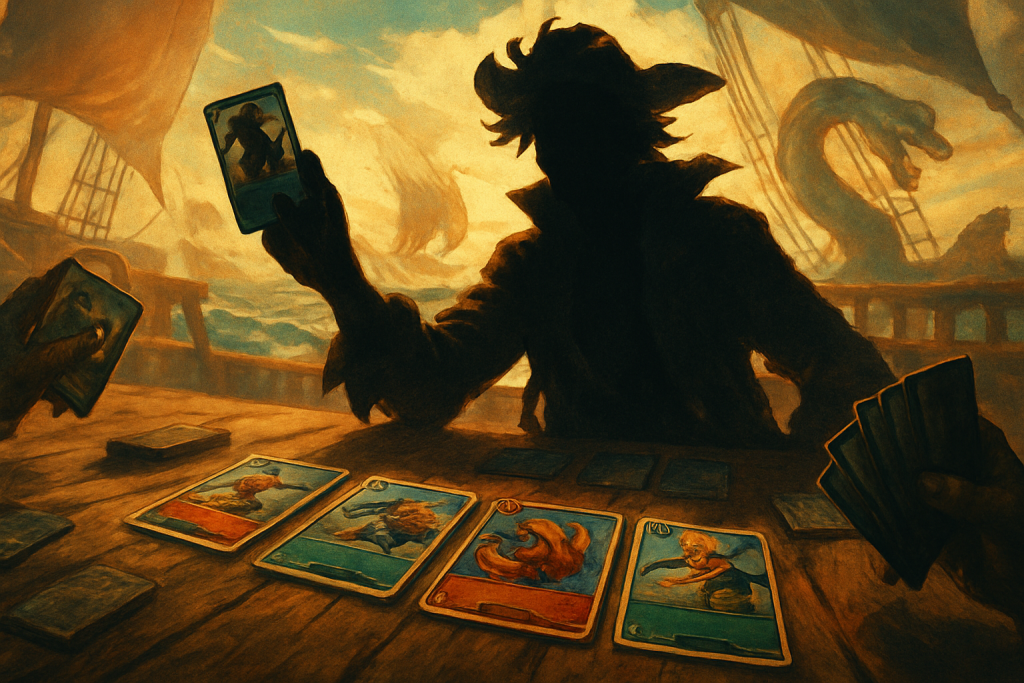
A real game-swing card does one of three things: it creates a major tempo swing, it compresses multiple roles into one card, or it punishes common beginner sequencing errors. In One Piece, that usually means one of the following outcomes:
- Removing a character while developing your own board
- Turning a losing defensive turn into a survivable one
- Generating a free body or extra resource without sacrificing pressure
- Invalidating the opponent’s attack plan for a full turn cycle
- Converting a small life lead into a lethal push
For beginners, these cards matter because they simplify decision trees. Instead of planning five turns ahead, it is often enough to ask one practical question: “If this card resolves now, does the board become easier to win from?” If the answer is yes and the opponent’s likely answer is limited, that is usually the right window.
These ten cards are especially useful for newer players because they appear in archetypes people actually play, they teach core concepts like value trading and Counter discipline, and they are relevant in games that do not go perfectly. That last point matters. A true staple should still be powerful when behind, not only when already winning.
1) Charlotte Katakuri (OP03) — life manipulation that fixes races

Why it swings games
Charlotte Katakuri is one of the clearest examples of a card that changes both tempo and life-race math at once. By placing a character with a cost of 8 or less on top of its owner’s Life cards, Katakuri removes an attacker or blocker and changes future trigger sequencing. Against decks trying to stabilize behind one key body, that effect often creates a window for immediate pressure while also denying a clean trash-based recursion line.
What to do with it
Use Katakuri when one opposing character is doing too much work: a blocker protecting lethal, a large attacker forcing awkward Counter use, or a utility body that will snowball if left alive. Beginners often hold Katakuri too long looking for the “perfect” target. In practice, if putting away one body lets the next attack connect into Life or preserves your own board for another turn, that is usually enough value.
Best for
Yellow leaders and players learning how to manage life as a resource. Katakuri teaches an important One Piece lesson: changing the order and quality of Life cards is often as important as raw removal.
When not to use it
Do not spend a full turn on Katakuri if the target does not materially affect combat. Sending back a low-impact body while the opponent still keeps a dominant board is usually too slow. Also be careful against decks that benefit from extra trigger density or can immediately attack over your 8-cost body on the backswing.
Practical scenario
The opponent has one large blocker and is at 2 Life. Removing that blocker with Katakuri and developing an 8-cost threat often forces them to answer the body and still face a weakened defense on the following turn. That is a classic “one card creates two turns of pressure” sequence.
2) Kouzuki Hiyori (OP06) — trigger setup and hand smoothing in yellow
Why it swings games
Kouzuki Hiyori looks modest, but it dramatically increases the quality of yellow turns by placing a card from hand on top of Life. That turns dead cards into future triggers, protects key pieces from discard pressure, and lets yellow decks convert life manipulation into planned value instead of random flips.
What to do with it
Use Hiyori proactively when the hand contains a powerful trigger or an expensive card that is currently clunky. Beginners should think of Hiyori as a setup tool, not merely a small body. If the next turn includes an effect that takes or adds Life, Hiyori becomes much stronger because it lets that sequence “draw” the exact card you staged.
Best for
Yellow players still learning trigger management and players who often waste valuable cards as awkward Counters. Hiyori rewards planning one turn ahead.
When not to use it
Avoid spending time on Hiyori when the board already demands immediate removal or defense. If the opponent is presenting lethal pressure soon, setting up future value can be too slow. Hiyori is strongest when there is still enough breathing room to cash in that setup.
Practical scenario
You have a trigger card in hand that is weak to cast now but excellent from Life. Hiyori places it on top of Life, then a yellow effect manipulates Life and effectively converts Hiyori into delayed card quality plus a better defensive texture.
3) Gecko Moria (OP06) — board rebuild in one card
Why it swings games
Gecko Moria is the kind of top-end card beginners remember because games often feel over after it resolves well. Bringing back Thriller Bark type characters from the trash while developing a large body turns one card into a board rebuild, combo piece, and pressure source. It punishes opponents who spent the early and mid game trading one-for-one.
What to do with it
Treat Moria as a payoff for disciplined trash setup. The best Moria turns are not random revival turns; they are planned turns where the revived characters either remove something, establish a blocker, or create enough board width to threaten lethal next turn. Newer players should map the trash pile by turn 4 or 5 so they know whether Moria is a tempo play or a recovery play.
Best for
Black players and anyone learning recursion-based resource loops. Moria is especially helpful for players who struggle to recover after losing the board once.
When not to use it
Do not rush Moria into a board state where the revived pieces have little immediate impact and the opponent can answer the 8-cost body efficiently. If the trash is not set up or your targets are low-value, Moria becomes merely “good” instead of game-breaking.
Practical scenario
The opponent clears two of your bodies and expects to take over on the next turn. Moria revives a key utility character plus a blocker, immediately restoring your attack count and making the opponent’s previous removal turn feel wasted.
4) Sabo (OP04) — protection that blanks removal windows
Why it swings games
Sabo is a premium example of a card whose text matters more than raw stats. Giving your characters protection from effects for the turn can completely shut off opposing removal plans. In a game where many decks rely on cost-based KO or effect removal to stabilize, Sabo can turn a seemingly open window into a failed turn for the opponent.
What to do with it
Play Sabo on the turn before the opponent’s likely sweep or targeted removal turn, not after the damage is done. This is where beginners improve fastest: identifying the opponent’s breakpoint turn. If a black deck is lining up removal based on cost reduction, or a control shell needs one cleanup turn to survive, Sabo can force them into inefficient combat instead.
Best for
Players on black or Revolutionary Army-adjacent shells, and beginners who already understand board development but need to improve board preservation.
When not to use it
Sabo is weaker against opponents who are mostly winning through battle rather than effects. It is also not ideal when your board is too small to justify protection. Preserving one low-impact body is rarely worth an entire key turn.
Practical scenario
You end turn with two relevant attackers and know the opponent’s next line usually involves effect-based cleanup. Sabo forces them to attack instead, often costing them DON!! efficiency and preserving enough pressure for a lethal crackback.
5) Eustass “Captain” Kid (OP01, 8-cost) — the board lock beginners must respect
Why it swings games
8-cost Kid remains one of the most punishing cards for unprepared opponents because it warps attack patterns immediately. A large body with a powerful defensive demand can freeze newer players into bad sequencing, especially when backed by blockers or Counter. If the opponent cannot remove Kid cleanly, they may lose an entire turn of productive attacks.
What to do with it
Play Kid when you can support it. The biggest beginner mistake is jamming Kid onto an empty or weak board with no defensive backup. Kid is strongest when it forces the opponent into a lose-lose choice: commit attacks inefficiently into Kid while the rest of your board survives, or ignore Kid and lose control of the race.
Best for
Green players and beginners who prefer straightforward board-centric game plans. Kid rewards simple but disciplined sequencing.
When not to use it
Avoid dropping Kid into matchups that can remove it efficiently or bounce around it without losing much tempo. It is also weaker when behind on board if the opponent can simply clear your support pieces and turn Kid into a delayed liability.
Practical scenario
You already have one blocker and one active attacker in play. Kid enters, and the opponent now must navigate forced attacks while still respecting the threat of your next swing. Even if Kid does not survive forever, the turn distortion it creates often wins the race.
6) Trafalgar Law (OP01, 5-cost) — tempo swing through bounce and development
Why it swings games
The 5-cost Trafalgar Law is one of the best cards for teaching true tempo in One Piece. Bouncing an opposing character while developing your own board compresses two actions into one turn. For newer players, this is the moment the game starts to click: a card does not need to KO something to create a huge advantage if it removes an attack from the table and improves your side simultaneously.
What to do with it
Use Law to punish overextension or to break up an opponent’s curve. Returning a mid-cost attacker they spent a full turn on while adding one of your own bodies can create a major DON!! gap for the next turn cycle. The strongest targets are characters with meaningful summon costs or effects the opponent cannot easily replay efficiently.
Best for
Red-green style players and anyone learning to value initiative over raw card count.
When not to use it
Law is less impressive against cheap bodies the opponent can replay without losing tempo. It is also a poor “panic button” if the bounce target is not the actual source of pressure. Beginners should ask whether the returned card changes the number of threatening attacks next turn; if not, the line may be too low impact.
Practical scenario
The opponent curves into a 5-cost attacker. Law bounces it, adds your own board piece, and turns their previous turn into a virtual pass while you become the player asking the hard combat questions.
7) Borsalino (OP02) — sticky defense that buys a full turn
Why it swings games
Borsalino is not flashy, but for beginners it is one of the clearest examples of a card that forces inefficient answers. A blocker that resists KO by effects often buys a full turn against decks relying on clean removal. That extra turn is frequently the difference between stabilizing and collapsing.
What to do with it
Play Borsalino before the turn where life total starts to matter. Beginners often deploy blockers too late, after they are already in lethal range. Borsalino is strongest when it protects both your life and your more valuable backline by creating an awkward attack requirement for the opponent.
Best for
Black control and midrange players, plus anyone who needs a reliable defensive anchor while learning matchup pacing.
When not to use it
Do not overvalue Borsalino against lists that can remove it by battle without losing much. If the opponent’s board naturally attacks over it and they are not relying on effect KO, the stickiness matters less than it looks on paper.
Practical scenario
You are at 2 Life, the opponent has multiple attackers, and your next turn includes a stabilizing 7- or 8-cost play. Borsalino frequently functions as the bridge that gets you there.
8) Gum-Gum Red Roc (OP04) — answer the one thing that must leave
Why it swings games
Red Roc is expensive, but beginners should learn it because it teaches target priority better than almost any other event. Sending a large character to the bottom of the deck answers threats that ordinary KO lines can struggle with, especially cards that are difficult to remove efficiently or likely to be revived later.
What to do with it
Use Red Roc on the threat that changes combat the most, not necessarily the most expensive card. If a single blocker or giant attacker is the reason your damage plan fails, that is often the correct target. The card is at its best when it converts a clogged board into an immediate attack window.
Best for
Blue control players and beginners who need a simple rule for premium removal: save it for the card that invalidates your whole turn.
When not to use it
Do not spend Red Roc on a target that cheaper interaction or combat can already handle. Because the DON!! investment is significant, using it on a medium threat while still losing the race usually leads to poor turns.
Practical scenario
The opponent resolves an oversized finisher and expects it to dominate the next two turns. Red Roc removes it cleanly, opens the lane, and can reset a game that was otherwise slipping away.
9) Roronoa Zoro (OP01) — low-cost aggression that changes race math early
Why it swings games
Not every game-swing card costs 7 or 8 DON!!. Early pressure pieces matter because One Piece rewards forcing Counter out of the opponent before their curve smooths out. Zoro is an important beginner card because it turns simple early turns into meaningful life-race advantages and punishes slow starts.
What to do with it
Use Zoro to establish attack count early and make the opponent defend inefficiently. Beginners often keep low-cost rush-style pressure pieces in hand too long while waiting for a “combo turn.” In many games, the right play is simply to start the race before the opponent sets up blockers and larger bodies.
Best for
Red aggro players and anyone who wants to understand how early chip damage snowballs into late-game lethals.
When not to use it
Zoro is weaker when the matchup heavily rewards board trading over life pressure or when the opponent’s leader naturally absorbs early attacks well. If attacking life early only feeds their trigger engine without creating real tempo, the pressure plan needs to be adjusted.
Practical scenario
An early Zoro attack forces 2,000 Counter from hand. That single exchange may look small, but it often means the opponent later fails to protect a key body or cannot survive the final two attacks.
10) Radical Beam!! (OP01) — the defensive event that steals turns back
Why it swings games
Beginners usually think game-swing cards must be characters. Radical Beam!! proves otherwise. Defensive events regularly decide whether a player gets one more draw step, one more attack phase, or one more chance to untap with a stabilizing body. In red decks especially, Radical Beam!! can turn an apparently clean lethal attack into a failed push.
What to do with it
Respect life thresholds and plan for the Counter value before the opponent attacks. The best use of Radical Beam!! is not “surprise, I lived.” It is counting in advance so that the opponent is lured into overcommitting DON!! or attacks into a line that does not actually kill you.
Best for
Red players, local-level tournament grinders, and any beginner who habitually burns Counter cards too early in the game.
When not to use it
Do not spend premium defensive events to protect life points that do not matter if your crackback is weak. Sometimes taking the hit preserves hand quality for the turn where survival actually changes the outcome.
Practical scenario
The opponent commits extra DON!! to force what looks like exact lethal. Radical Beam!! pushes the attack out of range, empties more of their turn resources than expected, and hands initiative back for your final swing turn.
How beginners should choose which of these cards to learn first
Do not try to master all ten at once. Start with the cards that match the deck style already being played.
- If the deck is aggressive: learn Roronoa Zoro and Radical Beam!! first.
- If the deck is board-centric midrange: focus on 8-cost Kid and Trafalgar Law.
- If the deck is yellow: start with Hiyori and Katakuri.
- If the deck is black control or recursion: prioritize Borsalino, Sabo, and Gecko Moria.
- If the deck is blue control: learn Red Roc timing before anything fancy.
The practical workflow is simple: after each match, review one turn where the game changed and ask whether one of these cards either created that swing or could have prevented it. That kind of review improves much faster than memorizing every possible interaction at once. For broader deck context and evolving archetypes, Deck Insider’s One Piece strategy archive is the right place to track how these staples fit into current lists.
Common limitations beginners should understand before overvaluing staple cards
Even the strongest game-swing cards fail when used without context. Three limitations come up repeatedly.
1. Expensive cards can lose to tempo before they matter
Cards like Katakuri, Gecko Moria, Kid, and Red Roc are excellent, but only if the game reaches the kind of turn where they can reshape the board. If the early game is mismanaged, these cards stay stranded in hand.
2. Protection is only good when the protected board matters
Sabo and Borsalino are powerful because they preserve value. If the board is weak, defensive text does not magically create advantage.
3. A swing card is not always the play on curve
Many beginners auto-play high-profile cards the moment they have enough DON!!. In One Piece, holding one turn for a stronger target, better attack order, or safer Counter posture is often correct.
A useful rule is this: if the card does not improve either attack quality, survival odds, or resource conversion on the very next turn cycle, reconsider the timing.
FAQ
Which of these cards is easiest for a new player to use well?
Borsalino and Radical Beam!! are usually the easiest starting points because their jobs are straightforward: buy time and protect life efficiently. Their timing still matters, but the role is clear.
Which card teaches the most about advanced One Piece fundamentals?
Trafalgar Law and Charlotte Katakuri are especially good teachers. Law teaches tempo and board compression. Katakuri teaches life manipulation and target selection.
Are these cards good in every format and every local meta?
No. Their value shifts with leader popularity, removal density, and speed of the environment. A card can remain powerful overall while being weaker in a specific local field.
Should beginners buy staples first or finish a full deck first?
Usually finish a playable deck first, then upgrade into staples that meaningfully change difficult matchups. A powerful standalone card does less than a coherent 50-card list with a clear plan.
Why do some cheap cards swing games as hard as expensive finishers?
Because One Piece is heavily driven by attack count, Counter thresholds, and DON!! efficiency. A cheap card that changes one early life exchange can decide the final turn just as much as an 8-cost finisher.
Conclusion
The most useful beginner lesson in the One Piece Card Game is that games rarely turn on “big cards” alone. They turn on cards that change the next turn cycle in a concrete way: a threat disappears, a board survives, an attack count collapses, or a lethal setup suddenly becomes possible. Charlotte Katakuri, Kouzuki Hiyori, Gecko Moria, Sabo, 8-cost Kid, 5-cost Trafalgar Law, Borsalino, Red Roc, Roronoa Zoro, and Radical Beam!! all fit that pattern for different reasons.
For a new player, the practical edge comes from using them with a purpose instead of on autopilot. Ask what role the card is serving in that exact moment, what it changes immediately, and what goes wrong if it is used one turn too early or too late. That habit turns staple recognition into actual match wins, which is the real difference between owning strong cards and letting them swing games.
Links in this article
Illustration image sources
Custom illustration image was created using the OpenAI Images API.